
Understanding the Importance of KIRF
KIRF rankings are more than just numbers; they reflect an institution’s commitment to quality and innovation.- Benchmarking Quality: KIRF objectively measures an institution’s strengths, offering insights into areas needing improvement.
- Accountability: Encourages transparency and adherence to best practices in teaching, research, and governance.
- Guidance for Stakeholders: Helps students, parents, and policymakers make informed decisions based on credible evaluations.
Key Parameters Driving KIRF Rankings
To achieve top rankings, institutions must excel across five critical areas:- Teaching, Learning, and Resources (TLR)
- a. Student Strength (SS)
- b. Faculty-Student Ratio (FSR)
- c. Faculty Qualification and Experience (FQE)
- d. Online Education (OE)
- e. Subscription to e-journals (SEJ)
- f. Financial Resources and their Utilisation (FRU)
- Knowledge Dissemination and Research Excellence (KDRE)
- a. Research Productivity (RP)
- b. Research Impact (RI)
- c. Intellectual Property Rights (IPR)
- d. Research Footprint/Consultancy/Startups (RFCS)
- Graduation Outcomes (GO)
- a. Metric for University Examinations (GUE)
- b. Metric for Entrance Examinations UGC-NET/JRF/CSIR/GATE/GRE (GEE)
- c. Placement and Higher Studies (PH)
- Outreach and Inclusivity (OI)
- a. Percentage of Students from outside the State/Country (Campus/Region Diversity-RD)
- b. Percentage of First Generation Learners (FGL)
- c. Facilities for Differently Abled (FDA)
- d. Social Inclusiveness(SI)
-
Scientific Temper and Secular Outlook (STSO)
- a. Initiatives/programmes organised/participated by students and faculty of the institutions reflective of scientific temper and secular outlook (STSO Ql)
- b. Adoption of Green Technology (GT)
- c. Accreditation and Ranking (AR)
Strategies to Improve Your KIRF Rankings
1. Focus on Teaching Excellence
- Recruit experienced faculty and provide continuous professional development through Faculty Development Programs (FDPs).
- Integrate innovative teaching methods and leverage technology for better learning outcomes.
2. Boost Research Output
- Incentivise faculty to publish in reputed journals and apply for funded research projects.
- Establish partnerships with industry leaders for collaborative innovation.
3. Enhance Infrastructure
- Modernise libraries, laboratories, and classrooms with state-of-the-art facilities.
- Develop robust digital platforms to facilitate online learning and hybrid education models.
4. Improve Student Outcomes
- Strengthen placement cells and build dynamic alumni networks.
- Offer comprehensive career counselling, skill development, and competitive exam training.
5. Foster Inclusivity and Community Engagement
- Support programs that cater to women, differently-abled students, and other underrepresented groups.
- Encourage outreach initiatives that strengthen the institution’s ties with the local community.
The Role of Outcome-Based Education (OBE)
Adopting Outcome-Based Education (OBE) can be a game-changer for institutions aspiring to climb the KIRF rankings. By aligning the curriculum with clear learning outcomes and demonstrating measurable student achievements, OBE can directly impact metrics in teaching quality, graduation outcomes, and perception. Key steps include:- Mapping assessments to program outcomes for transparent evaluation.
- Showcasing evidence of student success in rankings submissions.
Overcoming Challenges in KIRF Excellence
- Data Collection and Validation: Develop robust systems for gathering accurate and comprehensive data.
- Balancing Research and Teaching: Allocate resources effectively to support both high-quality teaching and impactful research.
- Resource Limitations: Leverage government and private funding to bridge gaps in infrastructure and faculty recruitment.


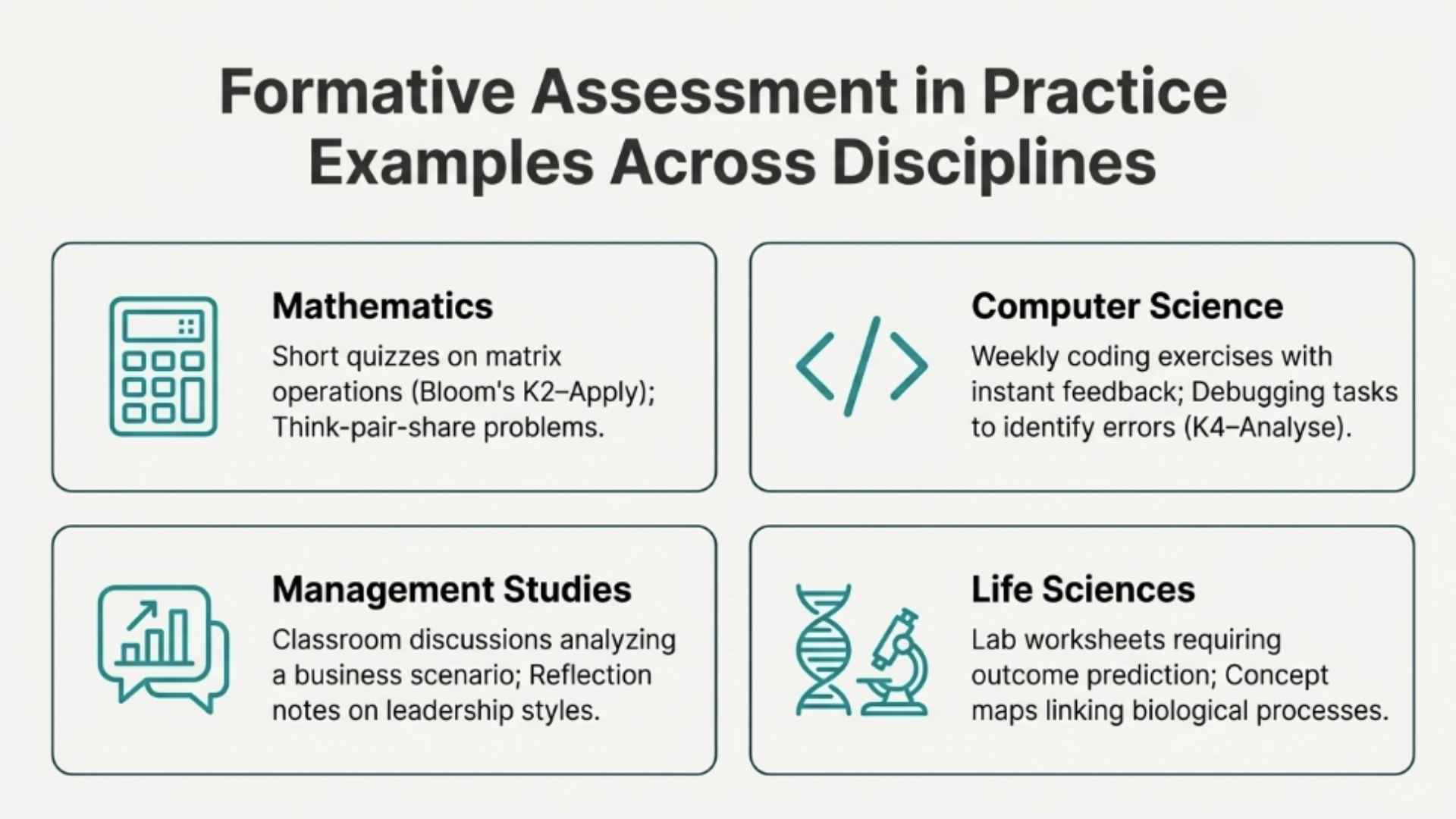 Mathematics
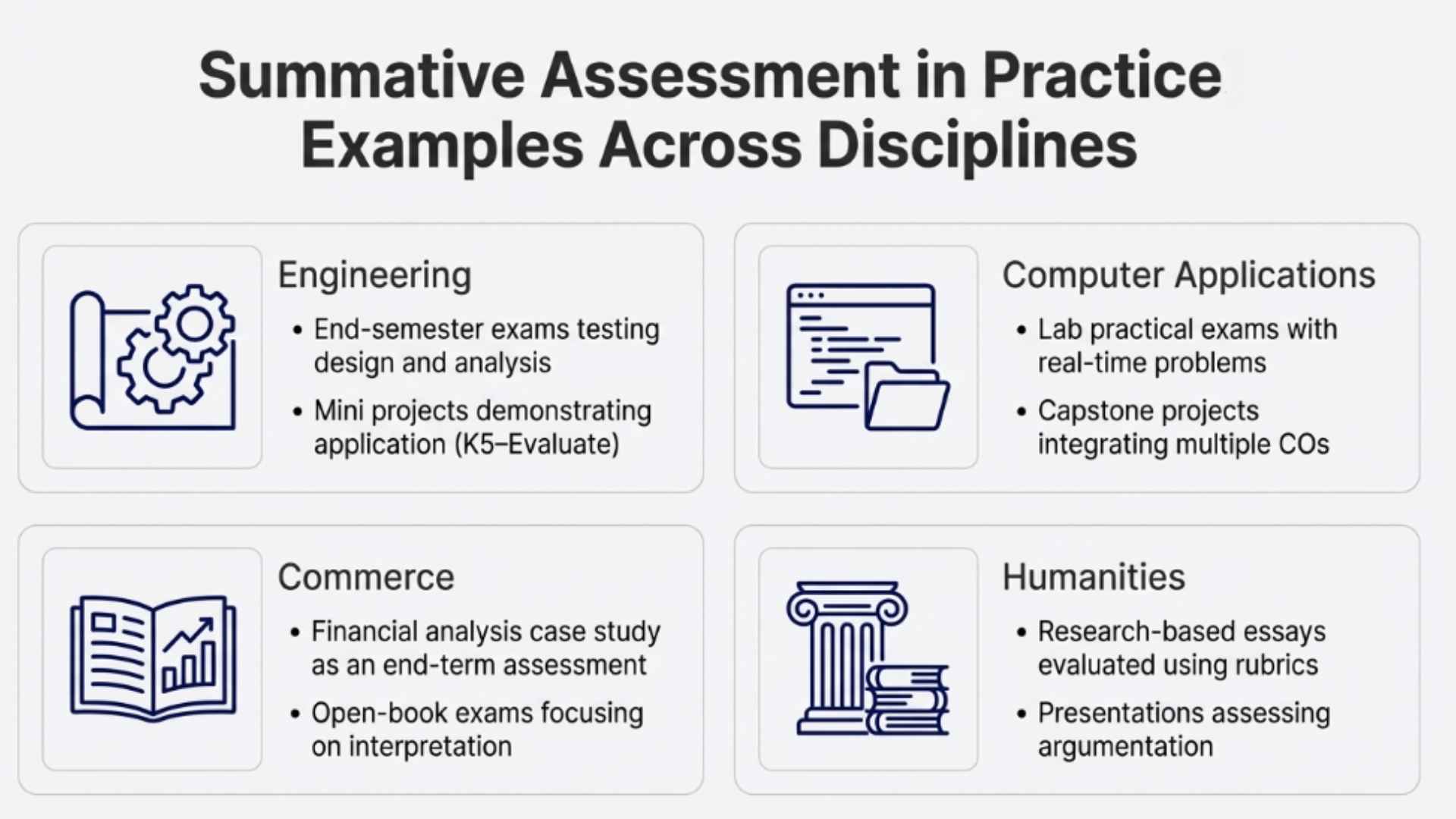 Engineering
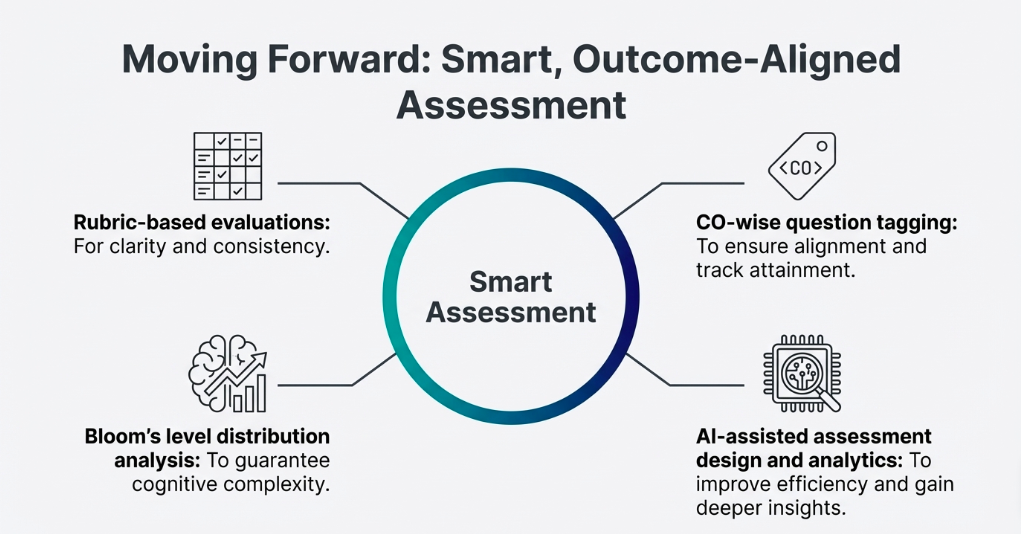 Yet, the philosophy remains traditional and timeless: Teach with care. Assess with clarity. Improve with evidence. When formative and summative assessments work together, education shifts from marks-driven to meaning-driven. And that’s where real outcomes happen. Author’s Note This article is grounded in practical OBE implementation experience across higher education institutions, aligned with accreditation frameworks and contemporary assessment research, while respecting long-standing pedagogical principles. [/fusion_text][/fusion_builder_column][/fusion_builder_row][/fusion_builder_container]