
Simplifying CO–PO Mapping in Outcome-Based Education
Accreditation by the National Board of Accreditation (NBA) is a mark of quality and credibility for engineering and technical institutions in India. One of the core elements of NBA evaluation is Outcome-Based Education (OBE), which ensures that programs not only deliver content but also measure how effectively students achieve defined competencies and graduate attributes. At the heart of OBE lies CO–PO Mapping:- CO (Course Outcomes) define what a student should achieve at the end of a course.
- PO (Program Outcomes) represent the broader skills and competencies a graduate is expected to possess.
What is Cluster Mapping?
Cluster Mapping is a technique used to group related courses or COs into logical clusters based on common themes, skills, or knowledge domains. Instead of mapping each CO directly to every PO, institutions first map courses to clusters and then map clusters to POs. This creates a two-step process: CO → Cluster → PO By introducing clusters, the mapping becomes more manageable, transparent, and NBA-friendly.Why Cluster Mapping is Essential for the NBA
NBA emphasises realistic and defensible mapping. Without clustering, programs often face challenges like:|
Challenge |
Impact |
|---|---|
| Hundreds of COs across semesters | Mapping becomes overwhelming and error-prone |
| Overlapping or similar COs | Leads to repetitive mapping |
| Faculty confusion | Inconsistent data entry and reporting |
| Unrealistic mapping (everything → everything) | Inflated results that fail peer review |
| Time-consuming audits | Difficult to justify mapping decisions |
| Benefit | Why It Matters for NBA |
|---|---|
| Simplifies complexity | Groups courses into 5–7 clusters, reducing COs to a manageable level |
| Prevents over-mapping | Only relevant clusters are mapped to specific POs |
| Enhances transparency | Easy to explain to NBA peer review teams |
| Improves traceability | Clear line of sight from course to program outcomes |
| Supports continuous improvement | Cluster-level data guides curriculum review and faculty development |
How to Implement Cluster Mapping
Step 1: Identify Clusters Begin by grouping courses based on similar objectives or domains. A typical engineering programme might use these clusters:| Cluster Code | Cluster Name | Example Courses |
|---|---|---|
| BS | Basic Sciences | Mathematics, Physics, Chemistry |
| ES | Engineering Sciences | Mechanics, Programming, Electrical |
| PC | Professional Core | Thermodynamics, Fluid Mechanics |
| PE | Professional Electives | AI, Renewable Energy |
| DP | Design & Projects | Mini/Major Projects, Design Thinking |
| HM | Humanities & Management | Communication, Ethics, Leadership |
| II | Internship & Industry Interaction | Internship, Industry Visits |
- 3 = Strong correlation
- 2 = Moderate correlation
- 1 = Low correlation
- 0 = No correlation
| Cluster | PO1 | PO2 | PO3 | PO4 | PO5 |
|---|---|---|---|---|---|
| BS | 3 | 2 | 1 | 2 | 0 |
| ES | 3 | 3 | 2 | 2 | 2 |
| PC | 3 | 3 | 3 | 2 | 3 |
| DP | 2 | 3 | 3 | 3 | 3 |
- Collect Direct Attainment Data:
- Semester exams
- Labs and practicals
- Projects, viva voce, assignments
- Collect Indirect Attainment Data:
- Student exit surveys
- Alumni feedback
- Employer feedback
- Combine direct and indirect using weightage from Config (e.g., Direct = 90%, Indirect = 10%).
- 50+ courses spread across 8 semesters
- 300+ COs total
- Courses grouped into 7 clusters
- Only 7 × 11 = 77 entries needed for cluster-PO mapping
- Massive reduction in workload while maintaining quality.
- Faculty Involvement: Engage faculty from each cluster area to ensure realistic mapping.
- Document Everything:
- List courses under each cluster
- Show how clusters were formed
- Maintain meeting minutes for NBA records
- Use Rubrics: Standardise assessment rubrics for direct and indirect evaluations.
- Review Annually: Revise cluster mappings as curriculum or industry requirements change.
- Leverage Tools: Consider OBE software or Excel templates to automate calculations.
Why NBA Prefers Cluster Mapping
During NBA peer reviews, evaluators look for:- Clear justification of mappings
- Logical grouping of courses
- Realistic correlation between curriculum and graduate outcomes
- Defend mapping decisions with evidence
- Streamline audits
- Show continuous improvement
Conclusion
Cluster Mapping is more than just a time-saver — it’s a strategic approach to managing complex OBE processes. By adopting cluster-based CO–PO mapping:- Institutions can simplify reporting
- Enhance data transparency
- Build credibility during NBA accreditation visits
Take Action
If your institution is preparing for NBA accreditation:- Identify 5–7 core clusters.
- Map all courses logically to these clusters.
- Use tools to automate calculations and dashboards.
- Train faculty in OBE and NBA documentation standards.


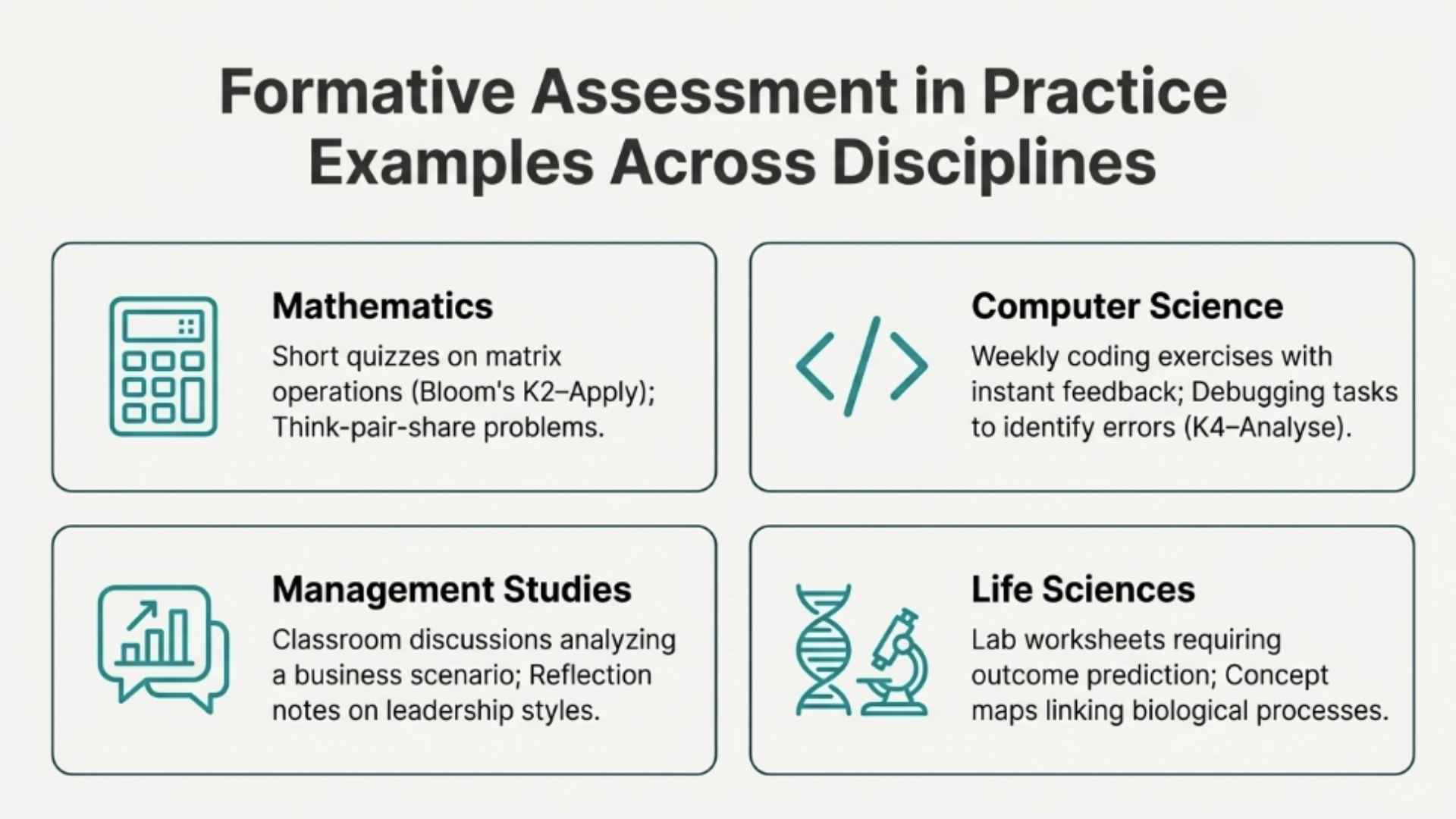 Mathematics
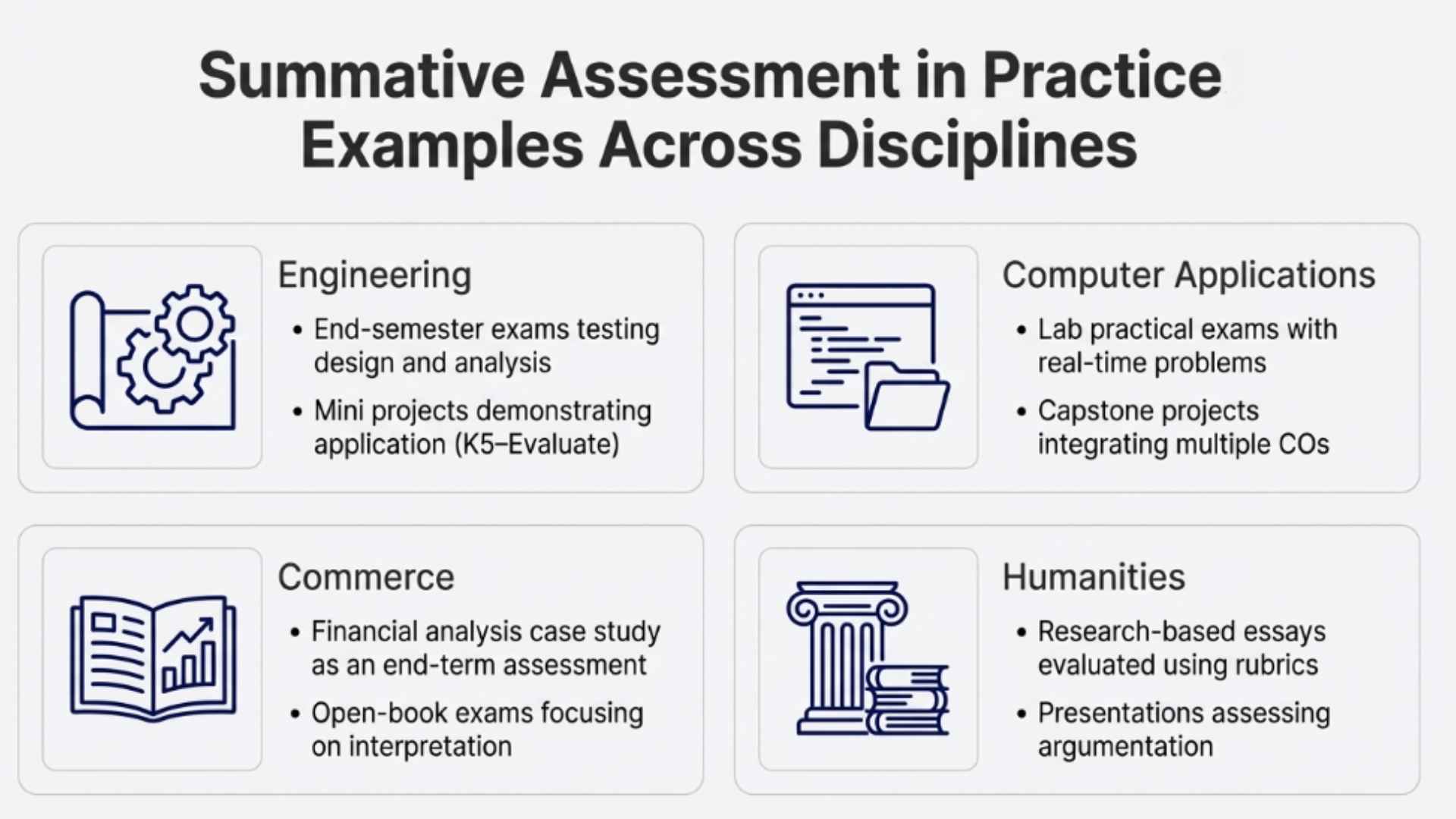 Engineering
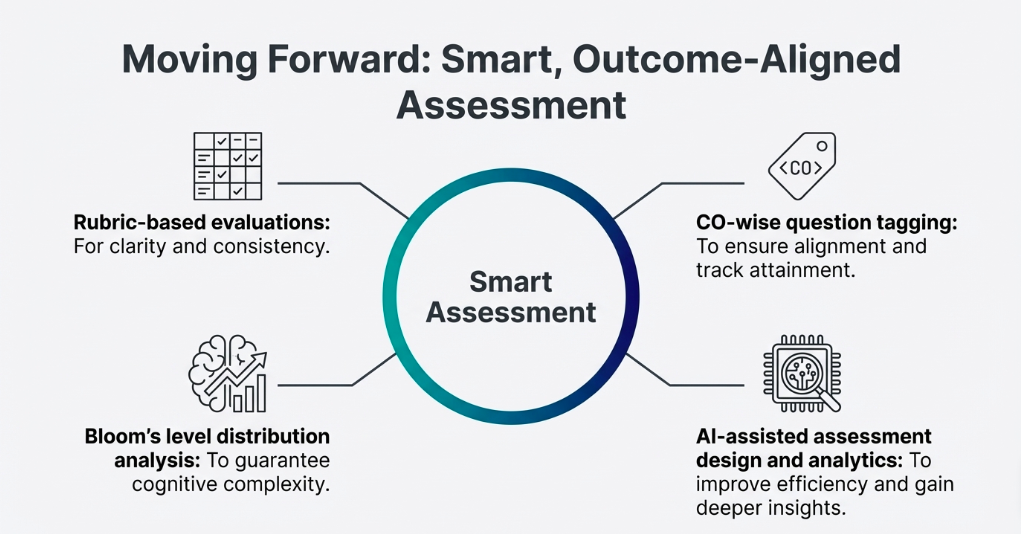 Yet, the philosophy remains traditional and timeless: Teach with care. Assess with clarity. Improve with evidence. When formative and summative assessments work together, education shifts from marks-driven to meaning-driven. And that’s where real outcomes happen. Author’s Note This article is grounded in practical OBE implementation experience across higher education institutions, aligned with accreditation frameworks and contemporary assessment research, while respecting long-standing pedagogical principles. [/fusion_text][/fusion_builder_column][/fusion_builder_row][/fusion_builder_container]