
- RPL’s Global Legacy
- A Kaleidoscope of RPL Practices
- Embracing Diverse Learning Journeys
- The RPL Portfolio
- Case Studies from UGC Guidelines
- Aligning RPL with Outcome-Based Education (OBE)
- Why RPL Matters
RPL’s Global Legacy
The roots of RPL trace back to mid-20th-century global education reforms aimed at lifelong learning.- Pioneering Nations: Countries like Australia, South Africa, and Canada integrated RPL into national qualifications to bridge informal learning and formal recognition.
- European Union: RPL is vital to the Bologna Process, harmonising qualifications and enabling seamless mobility for students and professionals.
- United States: The Credit for Prior Learning (CPL) initiative transforms workplace experience, military training, and self-directed learning into academic credits.
A Kaleidoscope of RPL Practices
RPL goes by different names worldwide, reflecting its adaptability:- Australia, South Africa, and New Zealand: Known as Recognition of Prior Learning (RPL).
- United States: Prior Learning Assessment (PLA) validates skills for credit.
- Canada: Prior Learning Assessment Recognition (PLAR) ensures formal recognition of informal expertise.
- Ireland: Central to the National Strategy for Higher Education to 2030, RPL facilitates credit transfers and formal assessments of prior knowledge.
- In 24 of 47 European higher education systems, RPL facilitated access, admissions, and academic progression.
- RPL served as a bridge for learners from non-traditional backgrounds, enabling them to participate in formal education and accelerate their careers.
Embracing Diverse Learning Journeys
Recognition of Prior Learning (RPL) serves as a transformative framework that acknowledges the myriad ways individuals acquire skills and knowledge outside conventional academic settings. By valuing diverse experiences, RPL opens doors for learners from all walks of life to pursue formal qualifications, fostering inclusivity and innovation in education. Candidates can earn credits toward qualifications through:- On-the-Job Training: Skills honed in real-world work environments.
- Volunteering and Community Engagement: Contributions to social causes that build teamwork, leadership, and problem-solving abilities.
- Self-Study: Independent efforts to master subjects or skills, often guided by personal interests or goals.
- Project-Based Learning: Experiences that encourage critical thinking, creativity, and collaboration.
Learning Through Immersion and Engagement
The UGC RPL guidelines highlight a spectrum of immersive learning opportunities that contribute to personal and professional growth, including:- Internships and Apprenticeships: Practical work combined with academic study for well-rounded skill development.
- Workshops and Seminars: Specialized forums for acquiring niche skills.
- Online Courses and Webinars: Digital platforms that democratise learning access globally.
- Interactive Experiences: Virtual reality modules, educational games, and simulations that foster active learning.
Cultural and Experiential Learning
HEIs may soon recognise and award credits for informal learning, allowing traditional skills to be converted into formal qualifications. RPL celebrates the richness of cultural, regional, and traditional knowledge systems, including:- Mentorship Models: Traditional Guru-Shishya Parampara (teacher-disciple tradition) that emphasizes personalized guidance and hands-on learning.
- Generational Knowledge: Skills passed down by traditional healers, artisans, and cultural practitioners.
- Community Learning: Peer-driven education within social and cultural groups.
Building Your Case: The RPL Portfolio
According to the UGC guidelines, prospective candidates are required to create a detailed portfolio that highlights their prior learning and achievements. This portfolio typically includes:- Academic Records: Transcripts and certificates.
- Professional Documentation: Work experience records, apprenticeships, project work.
- Supporting Evidence: Work samples, projects, testimonials, reflective essays, and more.
- Relevant to the chosen academic program.
- Up-to-date to reflect current skills and knowledge.
- Verified by independent sources to maintain credibility.
Rigorous Assessment: Proving What You Know
The RPL process goes beyond paperwork. Candidates often undergo:- Structured Interviews: Conversations with subject-matter experts to assess practical knowledge and communication skills.
- Oral Examinations: To validate deeper understanding in specialized areas.
Case Studies from UGC Guidelines
The UGC guidelines include illustrative case studies to help stakeholders better understand and implement the proposed recommendations. Case 1: The Entrepreneur’s MBA Journey Suresh, an entrepreneur with eight years of retail business experience, leveraged RPL to fast-track his MBA.- Portfolio Submission: Included financial records, marketing strategies, and testimonials.
- Assessment: The RPL body reviewed his portfolio and conducted an interview to map his knowledge against the MBA curriculum.
- Outcome: Suresh earned credits for relevant concepts, bypassed foundational courses, completed his MBA faster, and reduced tuition costs.
- Submission: GNM diploma, transcripts, and employer letters documenting professional experience.
- Evaluation: The panel compared her GNM curriculum with the B.Sc. program and conducted written and practical assessments.
- Outcome: She earned credits for prior learning, allowing her to skip certain courses and expedite her degree.
Aligning RPL with Outcome-Based Education (OBE)
The integration of Recognition of Prior Learning (RPL) with Outcome-Based Education (OBE) paves the way for inclusive, student-centric, and skill-oriented learning. By validating diverse learning experiences and aligning them with measurable outcomes, this synergy ensures academic relevance and enhanced employability.Key Benefits of RPL in OBE
- Student-Centric Approach: Both RPL and OBE prioritize learner needs by focusing on individual achievements and personalized pathways, allowing students to progress based on their prior learning and competencies.
- Enhanced Program Outcomes (POs): RPL can address POs such as lifelong learning, interdisciplinary knowledge, and ethical understanding, which might otherwise remain underemphasized in traditional courses.
- Flexible Learning Pathways: By mapping prior learning to OBE-defined outcomes, RPL enables learners to bypass foundational courses and focus on advanced areas, ensuring time-efficient and relevant education.
- Accreditation Support: The alignment of RPL with OBE strengthens accreditation efforts (e.g., NAAC, NBA) by showcasing inclusivity, student achievement, and alignment with industry demands, thereby highlighting the institution’s commitment to quality education.
- Tailored Skill Development: Bridging programs can address specific gaps identified through RPL, ensuring that learners meet academic and professional standards while achieving holistic development.
- Industry Relevance: RPL validates practical, non-formal learning, which complements OBE’s structured framework, enhancing the employability and readiness of graduates.
Why RPL Matters
The RPL framework extends beyond these examples, enabling candidates from diverse fields to:- Seek admission to new programs.
- Earn exemptions from courses that align with their prior knowledge.
- Accelerate their educational journey and reduce costs.


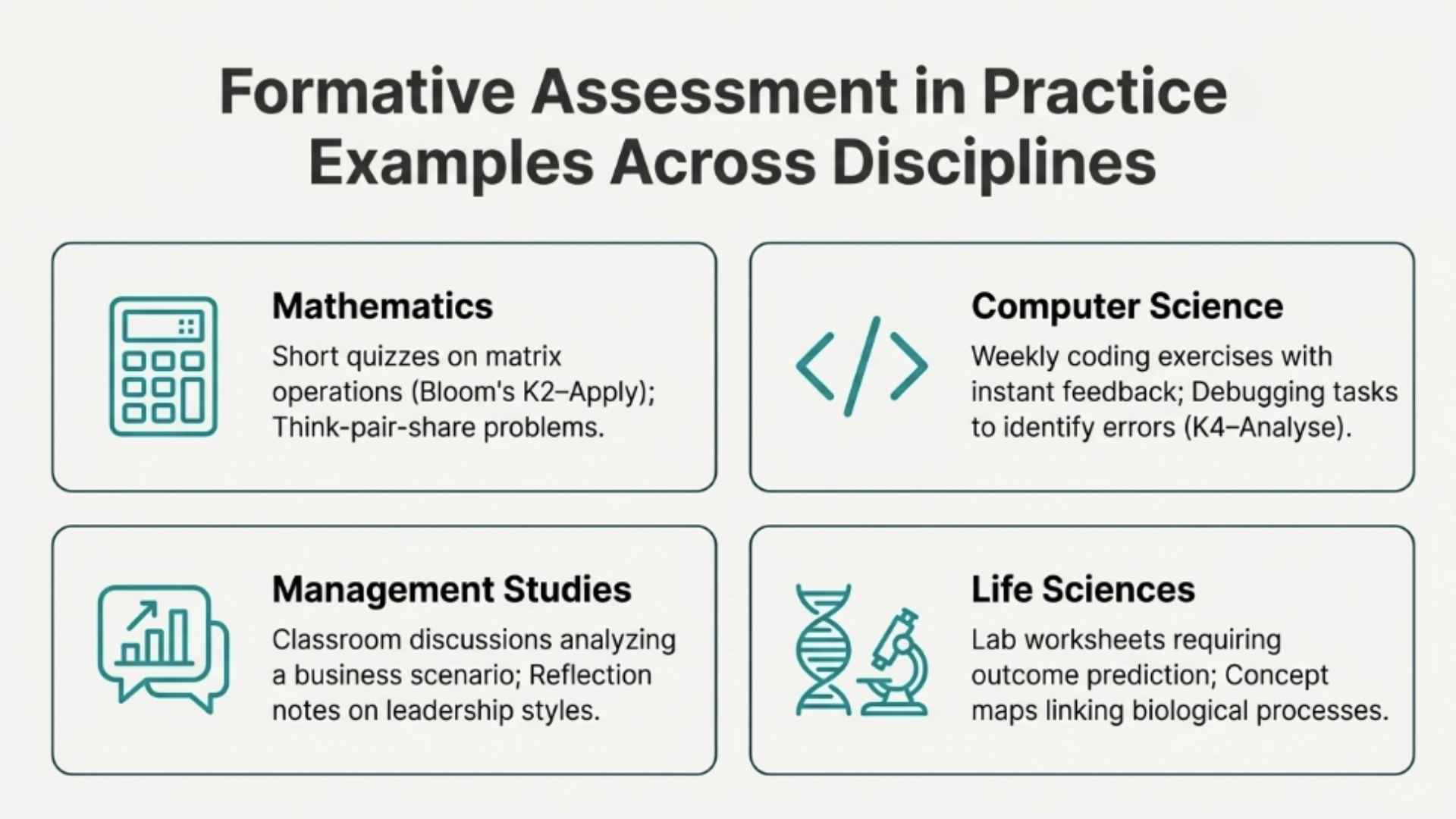 Mathematics
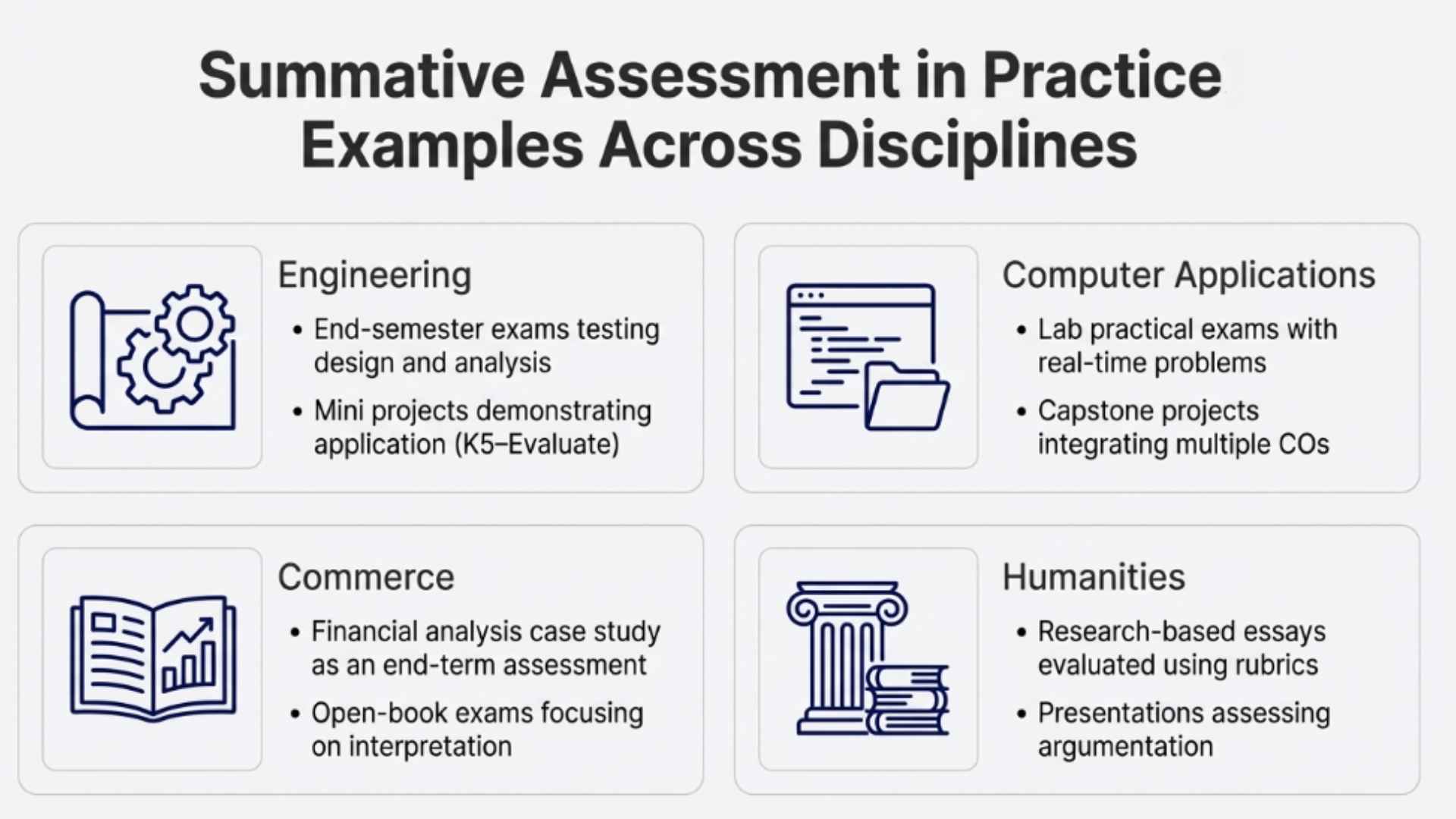 Engineering
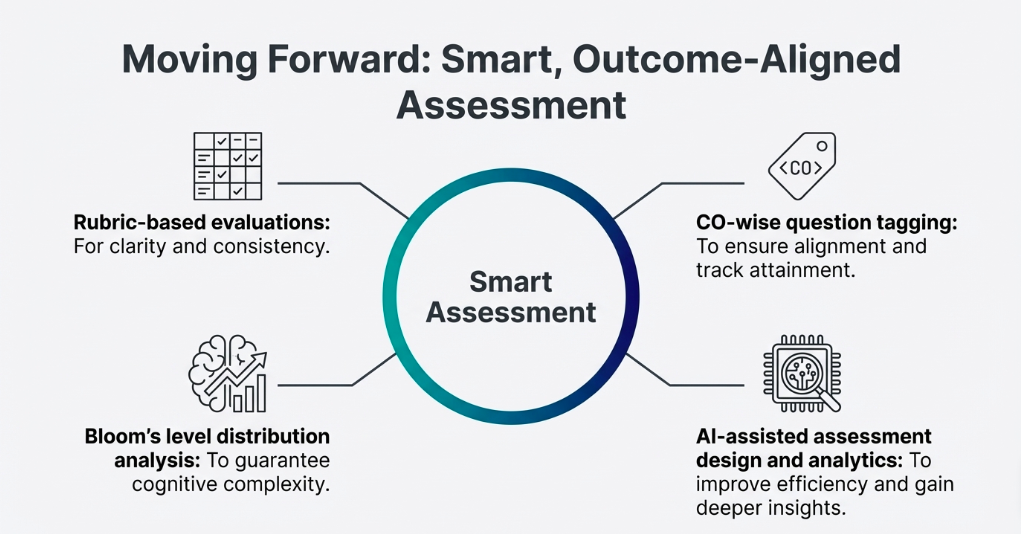 Yet, the philosophy remains traditional and timeless: Teach with care. Assess with clarity. Improve with evidence. When formative and summative assessments work together, education shifts from marks-driven to meaning-driven. And that’s where real outcomes happen. Author’s Note This article is grounded in practical OBE implementation experience across higher education institutions, aligned with accreditation frameworks and contemporary assessment research, while respecting long-standing pedagogical principles. [/fusion_text][/fusion_builder_column][/fusion_builder_row][/fusion_builder_container]