
Tailored IDP Template for Autonomous Colleges
(Based on UGC Guidelines and NEP 2020)
-
Institutional Vision & Mission
- Vision Statement: (E.g., "To be a leader in multidisciplinary education, research, and societal impact by 2033.")
- Mission Statement: (E.g., "Empower learners through innovation, inclusivity, and industry-aligned education.")
- Alignment with NEP 2020/SDGs: List 3–5 key national goals your IDP will address (e.g., Skill Integration, Equity, Digital Education).
-
SWOT Analysis Framework (Use this to identify priorities for your IDP)
| Category | Strengths (S) | Weaknesses (W) | Opportunities (O) | Threats (T) |
|---|---|---|---|---|
| Academic | Strong faculty in X discipline | Outdated curriculum in Y field | Collaboration with Industry Z | Competition from online platforms |
| Research | High-impact publications | Low patent filings | Govt. funding schemes (e.g., IMPRINT) | Brain drain to foreign universities |
| Infrastructure | Smart classrooms | Limited hostel capacity | Green campus grants | Rising maintenance costs |
| Governance | Transparent BoG | Slow decision-making | Autonomy status flexibility | Regulatory compliance burdens |
| Financial | Endowment funds | Over-reliance on tuition fees | CSR partnerships | Economic downturns |
- Leverage (S+O): Use strong faculty to secure industry collaborations.
- Mitigate (W+T): Modernize curriculum and adopt blended learning to compete with ed-tech.
-
Strategic Goals & Action Plan (Template for 10-Year Planning)
| Focus Area | Goal (2024–2033) | Actions | Responsible Team | Timeline | KPIs |
|---|---|---|---|---|---|
| Curriculum | 100% NEP-aligned programs | Revise 5 courses/year with industry input | Academic Council | 2024–2026 | 80% employability rate |
| Research | 50+ patents filed | Establish IPR cell + faculty incentives | Research Wing | 2024–2028 | 10 patents/year |
| Digital | Full ERP implementation | Partner with EdTech firms | IT Department | 2024–2025 | 100% paperless exams |
| Inclusivity | 30% female enrollment in STEM | Scholarships + mentorship programs | Admission Cell | 2024–2030 | Annual 5% increase |
-
Financial Sustainability Plan
| Revenue Stream | Current (%) | Target (2033) | Strategies |
|---|---|---|---|
| Tuition Fees | 60% | 40% | Reduce dependency via diversification |
| Industry Consultancy | 10% | 25% | MoUs with 10+ companies |
| Govt. Grants | 20% | 20% | Focus on NRF, IMPRINT-II |
| Alumni Endowments | 5% | 10% | Launch alumni engagement portal |
-
Monitoring & Evaluation
- Quarterly Reviews: Track KPIs via dashboards (e.g., research output, student satisfaction).
- Stakeholder Feedback: Surveys for students, faculty, and industry partners.
- Course Correction: Annual SWOT updates to refine strategies.
Key Takeaways for Kickstarting IDP
- Start with SWOT: Engage stakeholders (faculty, students, industry) in a SWOT workshop.
- Prioritize 3–5 Goals: Avoid over-ambition; focus on achievable, high-impact areas.
- Align with NEP 2020: Highlight skill integration, digital readiness, and equity.
- Budget Realistically: Balance aspirational projects (e.g., smart campuses) with revenue streams.


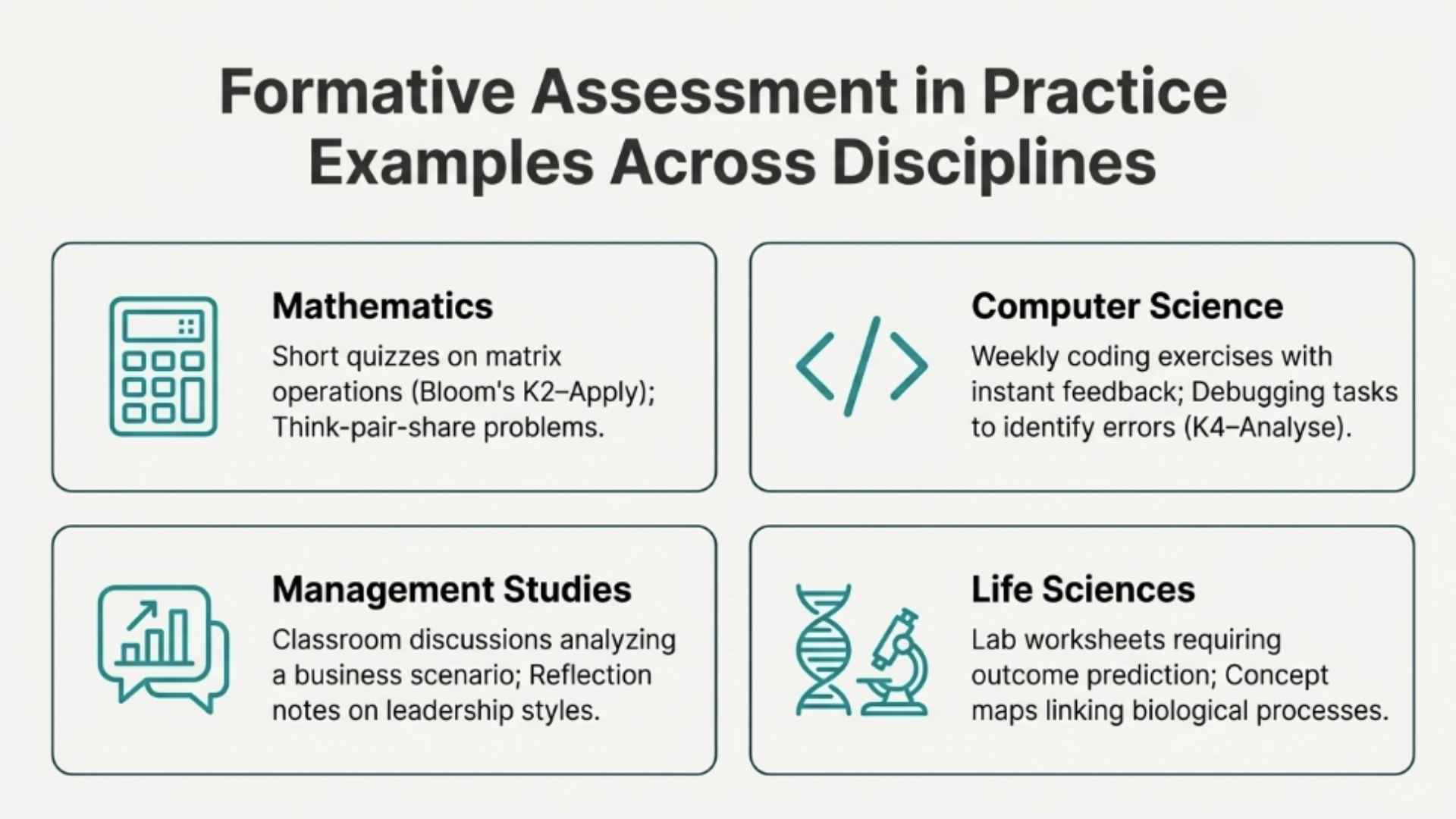 Mathematics
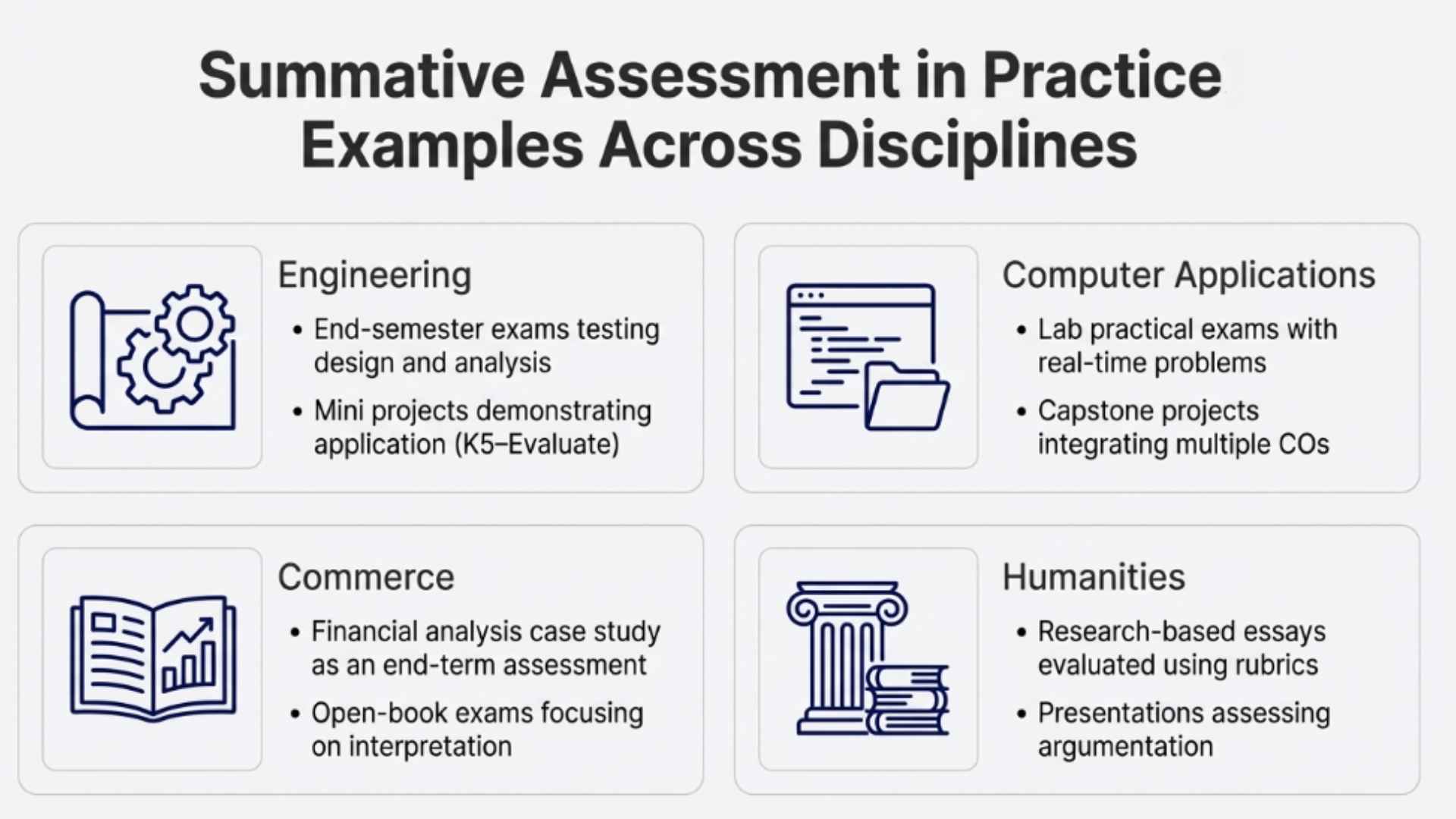 Engineering
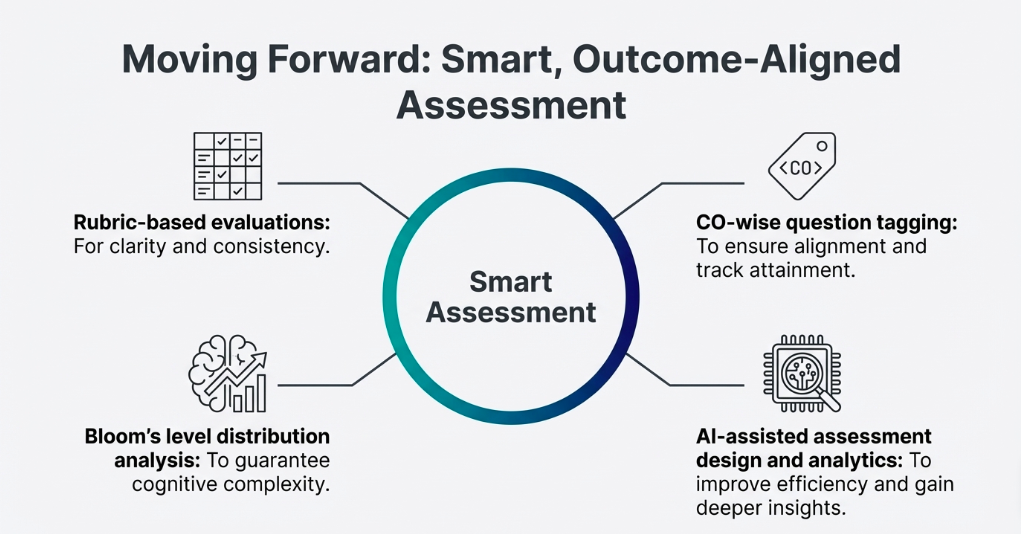 Yet, the philosophy remains traditional and timeless: Teach with care. Assess with clarity. Improve with evidence. When formative and summative assessments work together, education shifts from marks-driven to meaning-driven. And that’s where real outcomes happen. Author’s Note This article is grounded in practical OBE implementation experience across higher education institutions, aligned with accreditation frameworks and contemporary assessment research, while respecting long-standing pedagogical principles. [/fusion_text][/fusion_builder_column][/fusion_builder_row][/fusion_builder_container]