
The Academic Imperative: What Makes a Question Paper “Balanced”?
When we speak of balance, we are referring to several key dimensions:- Cognitive level distribution, based on Bloom’s Taxonomy: remembering, understanding, applying, analysing, evaluating, and creating.
- CO (Course Outcome) mapping to ensure questions are aligned with curricular intent.
- Weightage consistency, in line with university regulations and internal blueprints.
- Difficulty variation, to allow a fair and inclusive assessment environment.
- Structure and formatting that meet institutional norms and support moderation processes.
The Challenge of Manual Question Paper Creation
Despite increased focus on quality education and accreditation readiness, many institutions still rely on outdated practices:- Typing question papers in Word documents without taxonomy tagging.
- Reusing outdated questions without outcome alignment.
- Spending hours aligning marks with COs and learning levels.
- Struggling with inconsistent formatting that leads to delays in paper approval and moderation workflows.
- Depending on external question paper setters who may lack familiarity with the institution’s syllabus and academic objectives
Enter QnSmart i: The Intelligent Question Paper Generator
QnSmart i is an academic innovation developed by ipsr solutions limited, designed to meet the exact needs of modern educators working within an OBE framework. It enables faculty to generate perfectly balanced, NEP-aligned question papers in under one minute.Key Features of QnSmart i:
- Automated Blueprinting Define your internal, model, or semester-end exam pattern—QnSmart i handles taxonomy, marks distribution, and CO mapping.
- Outcome-Based Question Bank Access institution-specific and curated question banks tagged with Bloom’s levels and mapped to COs.
- Instant Paper Generation With one click, generate a complete question paper with all sections—auto-tagged, formatted, and moderation-ready.
- Customisation and Control Modify questions, adjust weightages, or insert institution-specific templates to maintain academic ownership.
- Audit-Ready Outputs Every paper comes with supporting documentation—ideal for submission to IQAC, Academic Councils, or Accreditation bodies.
Why It Matters: Alignment with NEP, NAAC, and OBE
QnSmart i is more than just a time-saving tool—it is a strategic asset for institutions committed to:- Implementing NEP recommendations, particularly around outcome-based curriculum and continuous assessment.
- Achieving and maintaining NAAC or NBA accreditation, by providing documented evidence of academic quality, transparency, and standardisation.
- Improving academic audit readiness with built-in moderation logs and attainment analytics.
- Scaling quality practices across departments without overburdening faculty.
Institutional Benefits
- Faculty Efficiency: Save hours on formatting and taxonomy tagging.
- Consistency: Standardised patterns for internal, model, and external exams.
- Compliance: Every paper is ready for submission to boards, IQAC, or external auditors.
- Customisation: Templates can be aligned with institutional policies and university norms.
- Academic Integrity: Eliminate duplication, ensure a transparent evaluation structure, and generate audit-ready documentation to support quality benchmarks.
- Expert Mentoring and Best Practices: Get guided support from OBE and assessment design experts during implementation. Institutions are mentored on best practices for blueprinting, question bank curation, moderation workflows, and accreditation readiness, ensuring that the tool is effectively embedded into academic processes.


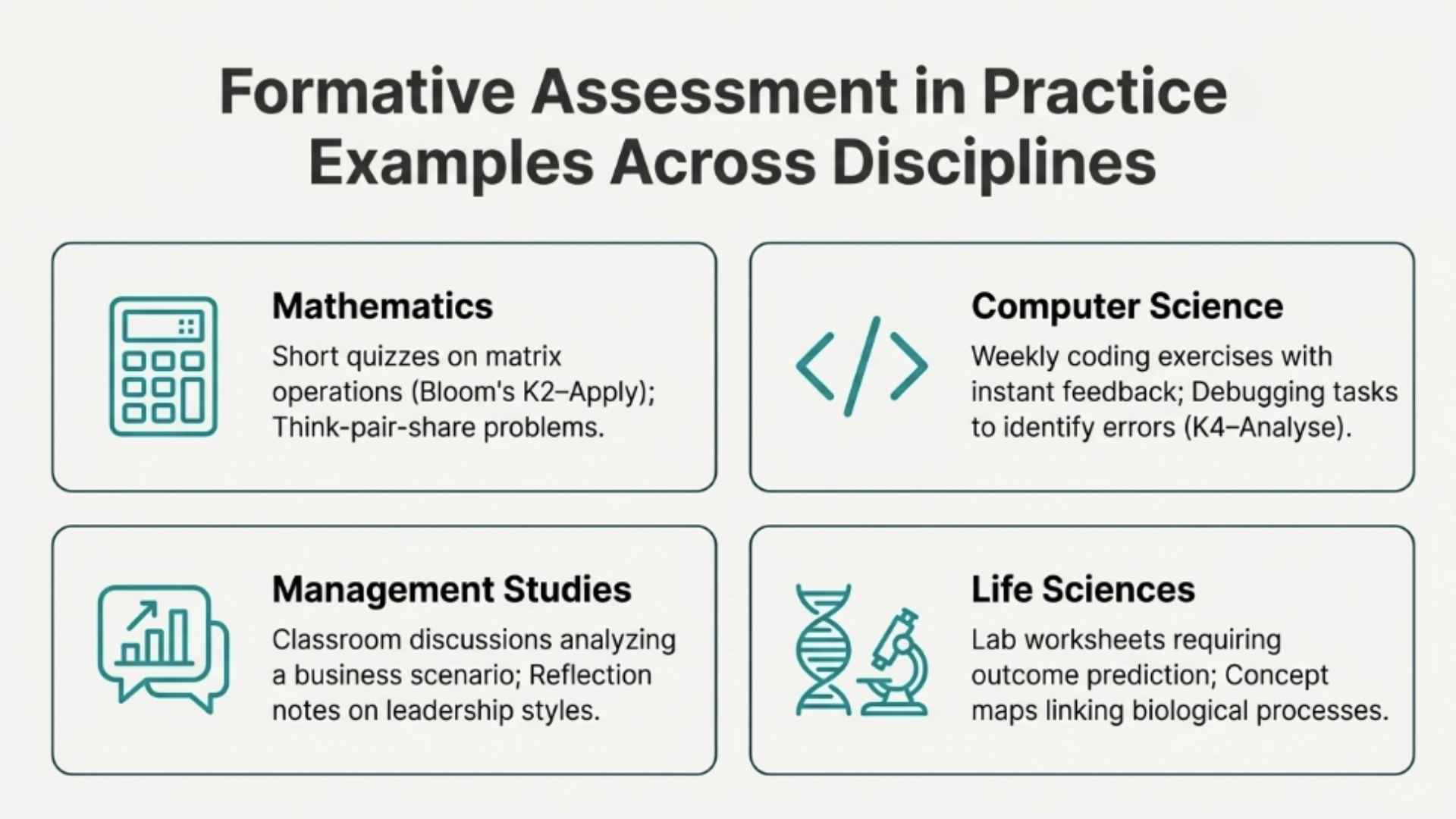 Mathematics
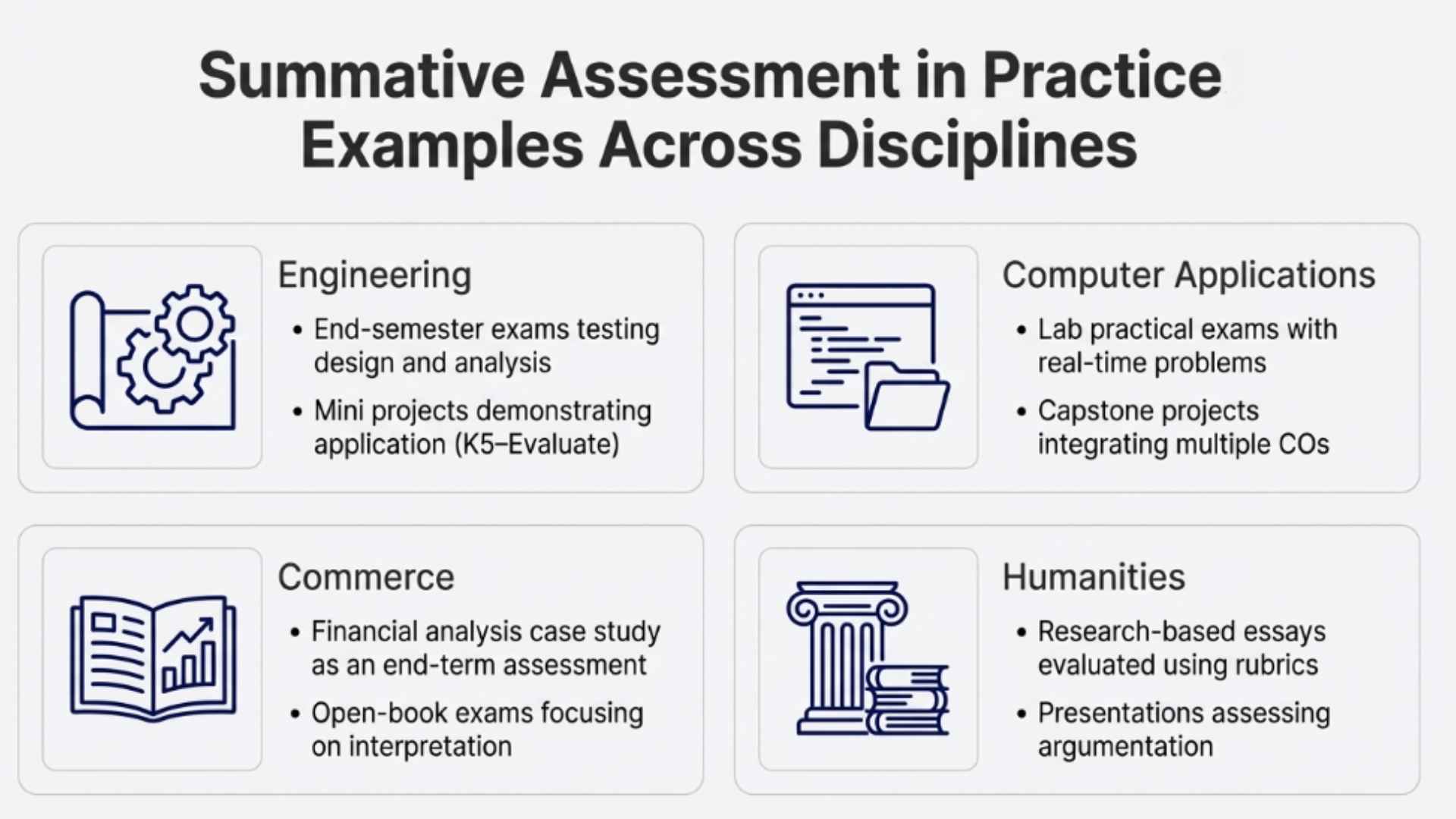 Engineering
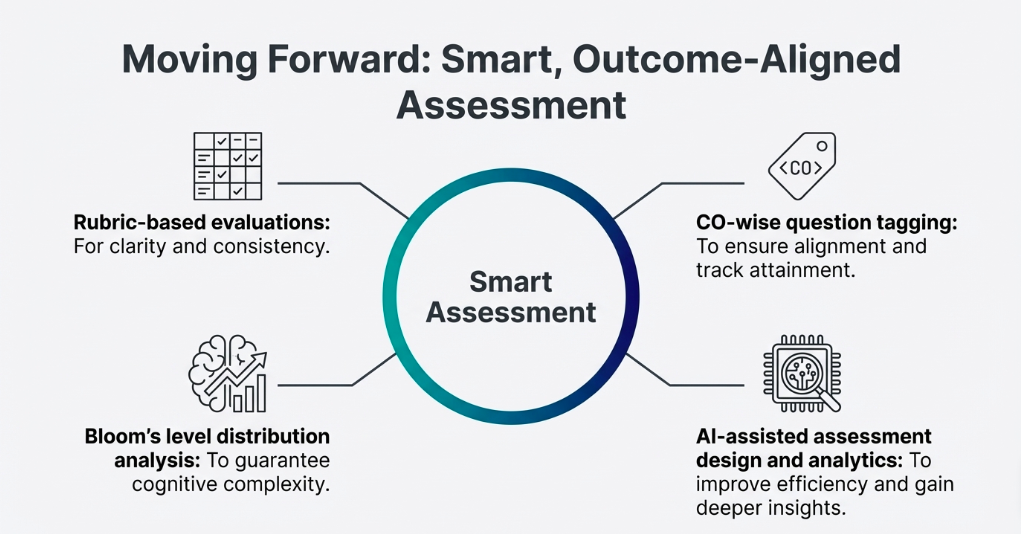 Yet, the philosophy remains traditional and timeless: Teach with care. Assess with clarity. Improve with evidence. When formative and summative assessments work together, education shifts from marks-driven to meaning-driven. And that’s where real outcomes happen. Author’s Note This article is grounded in practical OBE implementation experience across higher education institutions, aligned with accreditation frameworks and contemporary assessment research, while respecting long-standing pedagogical principles. [/fusion_text][/fusion_builder_column][/fusion_builder_row][/fusion_builder_container]