
Why the Shift? The Catalyst Behind the Change
NAAC's move towards Basic Accreditation and MBGL is not just a routine update; it is a strategic overhaul designed to restore credibility and integrity in the accreditation process. This shift comes in the wake of a controversial CBI case involving NAAC's Peer Review system, which raised concerns about the vulnerability of the existing framework to malpractice. In a decisive step, NAAC has:- Cancelled the accreditation process for the university involved in the CBI case, barring it from reapplying for five years.
- Debarred the seven Peer Team members implicated in the case from any future involvement in NAAC's assessment activities.
- Withheld results for HEIs evaluated by the said Peer Team members, pending critical review.
Understanding the New Frameworks: Basic Accreditation and MBGL
1. Basic (Binary) Accreditation
- What It Is: A straightforward "Yes" or "No" accreditation model. Either an institution meets the standards, or it does not.
- Who It’s For: Ideal for new institutions or those looking for a foundational assessment.
- Impact: This model eliminates subjectivity, ensuring a transparent, binary outcome.
2. Maturity-Based Graded Levels (MBGL)
- What It Is: A nuanced evaluation system that assesses institutions based on their maturity in implementing educational processes and quality standards.
- Who It’s For: Institutions aiming for detailed, graded levels of accreditation to reflect their growth and development.
- Impact: This model provides a graded approach, enabling institutions to benchmark and gradually enhance their quality standards.
Action Plan for HEIs: Navigating the Transition
With these paradigm shifts on the horizon, institutions need a strategic action plan to adapt and excel. Here's how to prepare:1. Evaluate Your Current Status
- Cycle 2 and Above: You can retain your current grade until the new frameworks are launched. Once they roll out, you may choose between Basic Accreditation and MBGL, depending on your preparedness.
- Cycle 1 Applicants: You have the option to opt for Basic Accreditation. If you’ve already paid fees, they will be adjusted against future applications.
- Existing RAF Applicants: If you wish to proceed with the Revised Accreditation Framework (RAF), assessments will be conducted online for colleges and in a hybrid mode for universities (both online and physical).
2. Choose the Right Path
- Basic Accreditation: Choose this if you’re seeking a foundational, binary outcome. This is ideal if your institution is new or if you want a straightforward assessment without the complexity of graded levels.
- MBGL: Opt for this if you are confident in your institution’s maturity and want a more detailed, growth-oriented evaluation. This is recommended for institutions aiming for continuous improvement and strategic growth.
3. Prepare for Rigorous Scrutiny
With NAAC adopting a no-nonsense approach post-CBI case, expect heightened scrutiny and rigorous evaluations. Here's how to prepare:- Conduct Internal Audits: Ensure all data and documents are accurate, transparent, and verifiable.
- Strengthen Internal Quality Assurance Cells (IQAC): Enhance your quality control mechanisms to meet NAAC’s elevated standards.
- Focus on Integrity and Authenticity: Given the context of malpractice, maintain the highest standards of integrity in documentation and reporting.
4. Leverage Technology and Advanced IT Features
NAAC’s new frameworks will incorporate advanced IT-based features to ensure objectivity and transparency.- Invest in Digital Infrastructure: Ensure your institution is equipped with the necessary digital tools and infrastructure to facilitate online or hybrid assessments.
- Data-Driven Decision Making: Utilize data analytics to track performance metrics and showcase evidence-based outcomes.
5. Stay Updated and Informed
- Monitor NAAC Announcements: Keep an eye on official notifications, guidelines, and Standard Operating Procedures (SoPs) for online and hybrid assessments.
- Engage with NAAC Webinars and Workshops: Participate in capacity-building initiatives offered by NAAC to stay informed about the new frameworks and methodologies.
- Network with Accredited Institutions: Collaborate and learn from institutions that have successfully navigated the accreditation process.


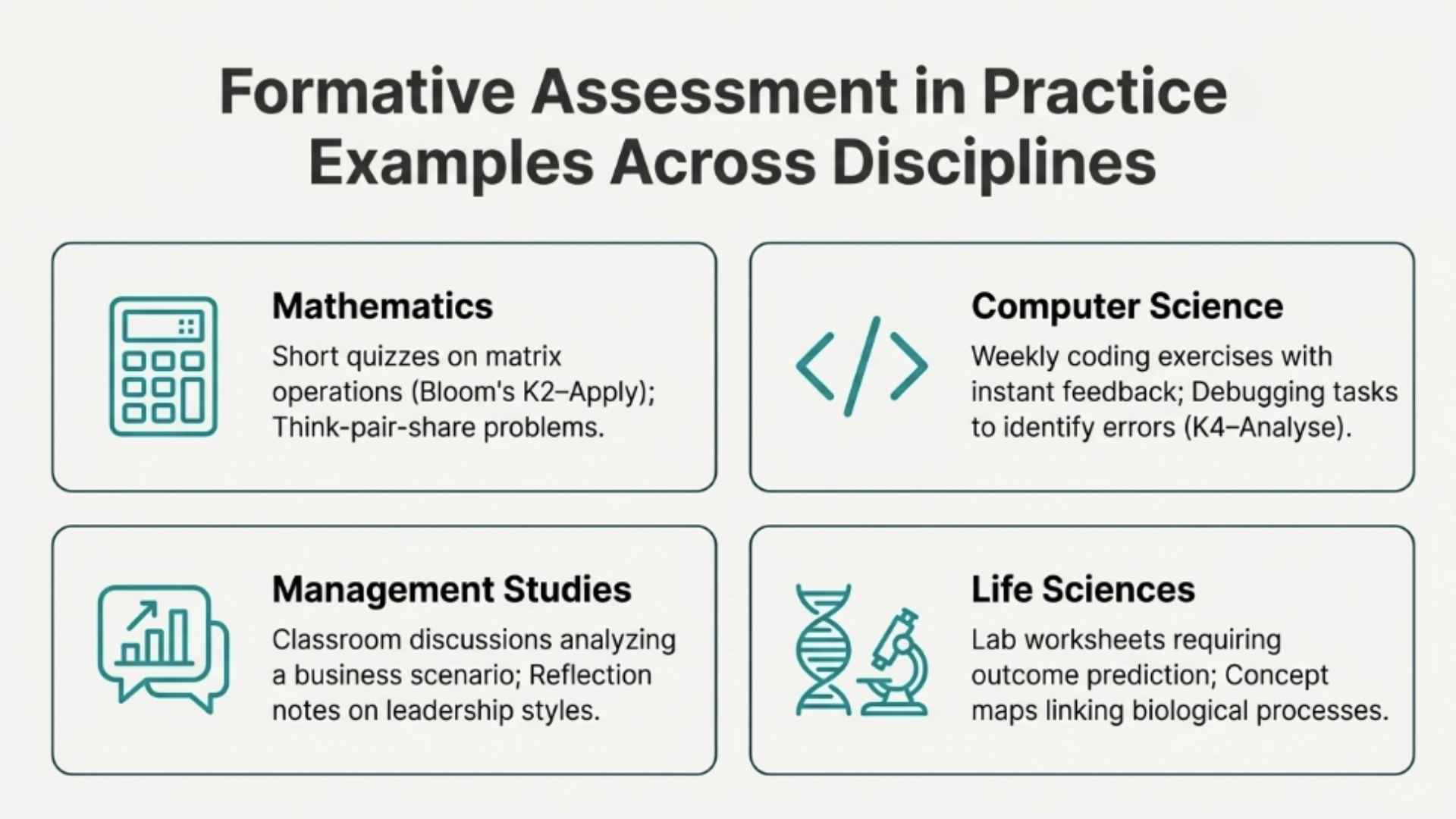 Mathematics
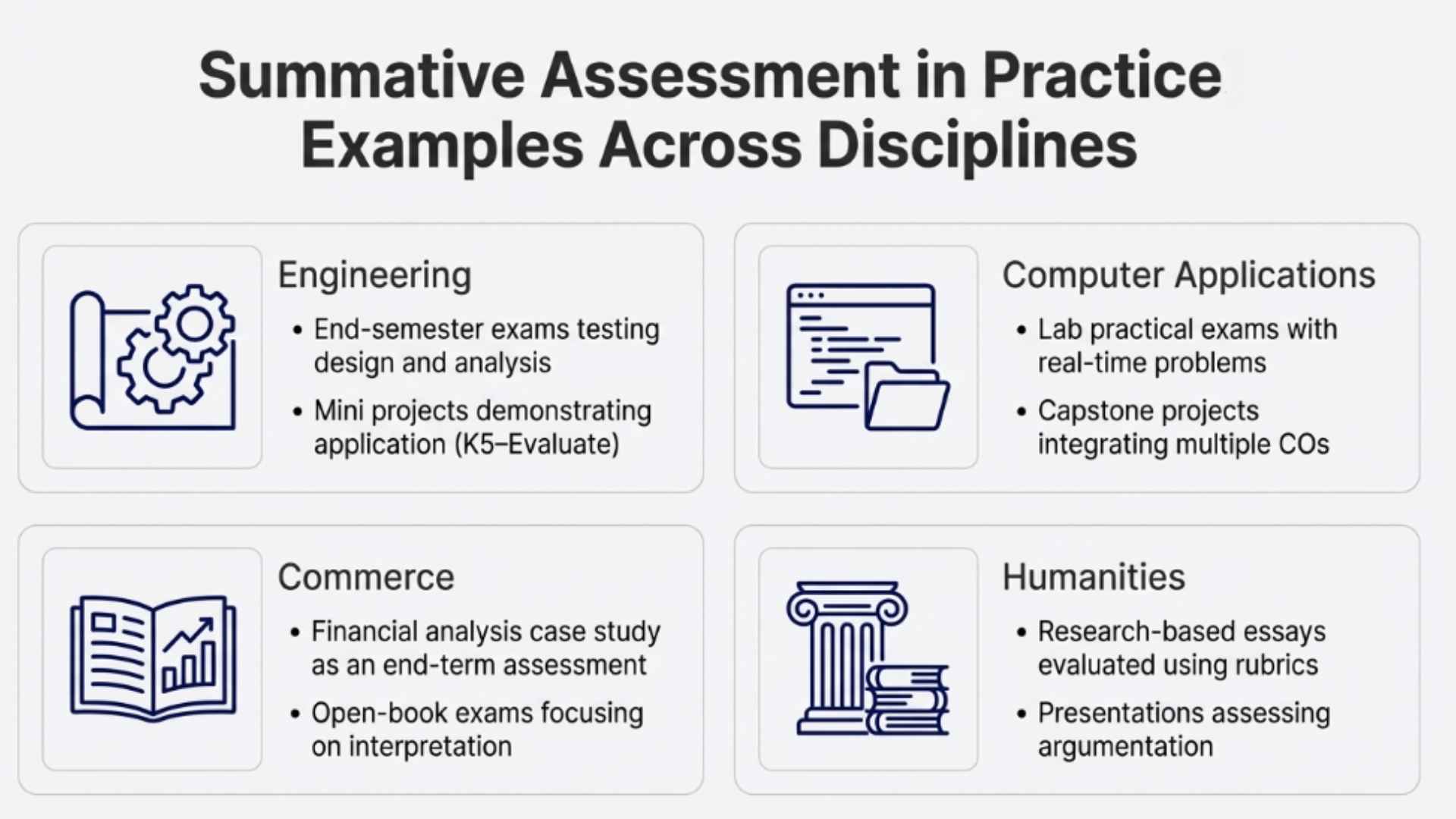 Engineering
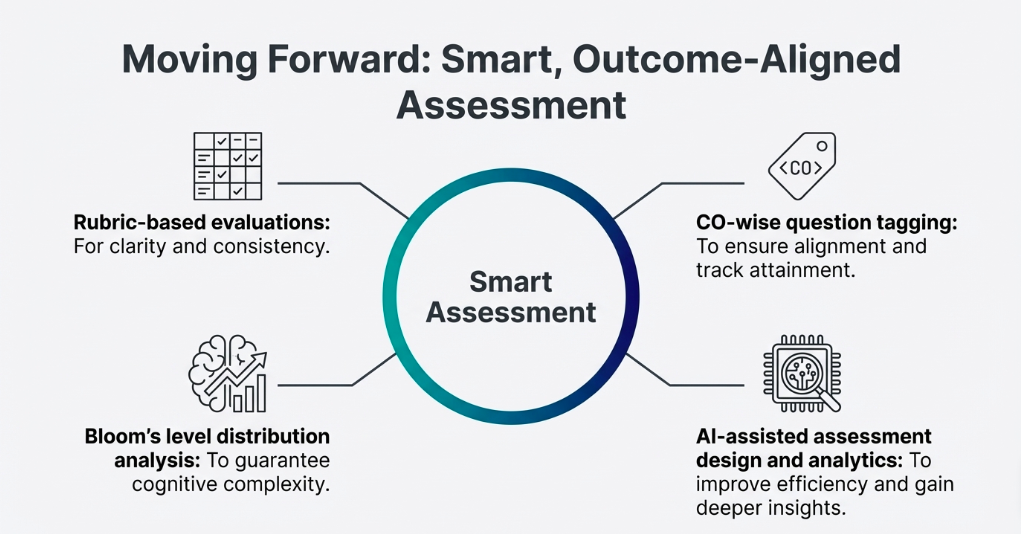 Yet, the philosophy remains traditional and timeless: Teach with care. Assess with clarity. Improve with evidence. When formative and summative assessments work together, education shifts from marks-driven to meaning-driven. And that’s where real outcomes happen. Author’s Note This article is grounded in practical OBE implementation experience across higher education institutions, aligned with accreditation frameworks and contemporary assessment research, while respecting long-standing pedagogical principles. [/fusion_text][/fusion_builder_column][/fusion_builder_row][/fusion_builder_container]