
By collaborating with the industry, Higher Education Institutions will be able to easily overcome curricular challenges in terms of preparing students for employability and aligning with NEP goals.
One of the best ways for HEIs to keep their graduating students ahead of the employability curve is to foster effective industry-academic partnerships. Students will gain access to courses and learning outcomes that are designed according to industry demands. In addition, they can provide you with invaluable insights into what students should do in terms of job preparation.
The benefits of industry-academic partnerships are limitless, but it's important to tread carefully. Below are some tips on how to forge effective partnerships with academia.
Understanding Outcomes-Based and Skill-Based Education
Before you can understand how industry-academic partnerships can foster effective outcomes-based education, you need to understand what outcomes-based education (OBE) and skill-based education are. Simply put, OBE is an education system that measures success by the outcomes a student achieves, rather than by the time or effort expended in the classroom.
It's a shift away from the traditional educational model, which measures success by how well a student has memorised information. OBE focuses more on what students can do with what they have learned than on what they know. This makes it relevant to both students and employers, as it prepares students for the real world and meets the needs of businesses.
The concept of OBE naturally puts skill-based education or vocational education in focus, where students master specific skills that prepare them for the job market.
NEP 2020: Transitioning Indian HEIs to an Outcome and Skill-based Approach
With NEP 2020, there has been a marked paradigm shift from the knowledge-based approach to the skill-based approach in the Indian Higher Education Sector in a transformative move to reskill our youth and build future competencies. Through the mainstreaming and integration of vocational education into general education, which will assist students in developing a variety of skills to meet industry demands and enhance the quality of education, the National Education Policy (NEP) 2020 has placed a special emphasis on vocational education.
The new policy has created a skill-based education model. This has increased awareness of vocational programs designed to develop skills, employability, and self-reliance. Additionally, the National Education Policy 2020 recognizes the importance of soft skills as vital life abilities, such as communication, teamwork, problem solving, decision-making, analytical thinking, and resiliency.
As our colleges and universities slowly transition to this new system to align with NEP goals, they must find intelligent and efficient ways of integrating it and benefiting student employability.
The National Skills Qualification Framework (NSQF) includes significant elements like horizontal and vertical mobility between vocational, general, technical, and job-specific education; outcomes-based learning; industry engagement; national occupational standards; competency-based curriculum; credit accumulation and transfer systems (credit banking); recognition of prior learning; quality assurance; and resource sharing. Standards for assessment and certification will be developed by regulatory bodies such as UGC/AICTE, Sector Skill Councils, or the relevant industry, and may need to be approved by NSQC in some cases.
Benefits of Industry-Academic Collaboration in HEIs
When industry and academia work together, both parties stand to gain a great deal. In the field of Information Technology (IT), for example, industry-academic collaboration has led to a number of benefits for students, educators, and the industry itself. Here are some key benefits of this type of collaboration:
- Students receive an education that is tailored to meet the needs of the industry. This means that they are learning the latest technology and skills that businesses are looking for. As a result, they are more likely to be hired by companies after they graduate.
- Educators have access to resources that help them update their courses and teaching methods. They can also get feedback from industry professionals on how well their students are performing and what skills they need to improve.
- The industry benefits from having a ready supply of graduates with the necessary skills and knowledge. It also has access to the latest research and technology from universities.
Course Design That Addresses Industry Demands
An important part of designing Outcome Based Education is to make sure that the courses you're offering meet the needs of industries.
To do this, you need to have a good understanding of the skills that industries are looking for, and then design your courses accordingly.
This means that your syllabus will be constantly evolving and changing to keep up with the latest industry demands. However, this is a good thing! It means that your students will always be learning relevant, up-to-date information that they can use in their careers.
Of course, designing courses in this way takes a lot of work and collaboration between academia and industry. But the end result is worth it, as it leads to more effective and successful outcomes-based education.
Creating and Implementing Learning Outcomes
Creating and implementing learning outcomes can be a collaborative effort between industry and academia. Learning outcomes can be created by mapping the skills required for a certain job or industry and then designing course content and learning activities to help students acquire those skills.
Industry representatives can provide valuable insights into the skills that are currently in demand and may also be able to offer advice on how best to design courses and learning outcomes to meet the needs of the industry. Collaborating with industry partners can help ensure that courses and learning outcomes are aligned with the latest industry trends and demands.
Red Hat Global Certifications: Delivering Successful Learning Outcomes to Indian HEIs
Data from the International Labor Organization (ILO) and the National Council for Skill Development and Entrepreneurship (NCSDE) predict a 29 million skill gap by 2030. This skill gap has already had an impact, with 53% of Indian businesses reporting that they are unable to hire suitable candidates due to a lack of future skills. Globally valid certifications delivered by the Open Source technology education leader, Red Hat, are a great way to overcome the skills gap challenge and prepare students for the most in-demand skills. IT and Data are the most sought-after professions globally, according to a new ManpowerGroup survey. In a recent circular, UGC recommended that Higher Educational Institutions (HEIs) and their affiliated colleges/institutions interact with the leading IT - industries for the development and promotion of industry-oriented course modules.
Red Hat’s training and assessment are completely focused on learning outcomes; primarily preparing students for the industry. The training is collaborative, and the assessment is based on live tasks as one would have them at a workplace. A minimum of 70% is required to qualify for the certifications, and once a student qualifies, they are ready for employment without any further training.
HEIs would hugely benefit from installing an industry-led culture by offering these certification programmes in collaboration with Red Hat, which would make them employability ready; one of the primary goals of NEP.
I-Max OBE+: Delivering Future-Ready Skills to Indian HEIs
The World Economic Forum’s Skill Outlook in August 2021 predicted that by 2022, the skills required to perform most jobs will have shifted significantly. Skills gaining prominence include analytical thinking and active learning as well as skills such as technology design, highlighting the growing demand for various forms of technology competency.
The 2022 skills equation includes more than just technological competence. The value of "human" skills such as critical thinking, persuasion, negotiation, attention to detail, resilience, flexibility, complex problem-solving, emotional intelligence, leadership, social influence, as well as service orientation, will grow in prominence.
But how can these courses be taught at our institutions? That too with consistent results. The I-Max OBE+, a 360-degree, OBE-driven learnability-employability platform that includes an AI-based professional interview and viva-você simulator, comes into play here. A blended learning system for comprehension and concept generation, the platform covers prominent future-ready soft skills such as critical thinking, negotiation skills, emotional intelligence, and leadership. The learning is entirely adaptive and changes to accommodate the learner’s needs.
Employability skills are professional aspects of graduate attributes in outcome-based education, and I-Max OBE+ assists HEIs in successfully addressing these graduate attributes and becoming NEP-compliant.
Conclusion
So what does this all mean for Indian HEIs? In order to foster an effective industry-academic partnership, you need to create a process that allows for the development and approval of courses and learning outcomes. The process should be designed according to the demands of industry and should allow for the involvement of industry partners in the development and approval of courses and learning outcomes.
Fostering effective industry-academic partnerships to introduce skill-based education and outcome-based education through skill-readiness programmes and certifications by Red Hat and I-Max OBE+ Platform, can help HEIs design courses that are technically updated as well as align with NEP and NSQF goals. Red Hat, a pioneer in training and assessment that is outcome-focused, does just that, through its academic partnerships that deliver industry-driven, globally valid certifications.
IPSR, a pioneer in Outcome-Based and Skill-based education, empowers HEIs to align their teaching-learning strategies to NEP goals by facilitating competency programmes. For more details on how your HEI can make this transition, please contact us at +91 9020592530.
[/fusion_text][/fusion_builder_column][/fusion_builder_row][/fusion_builder_container]

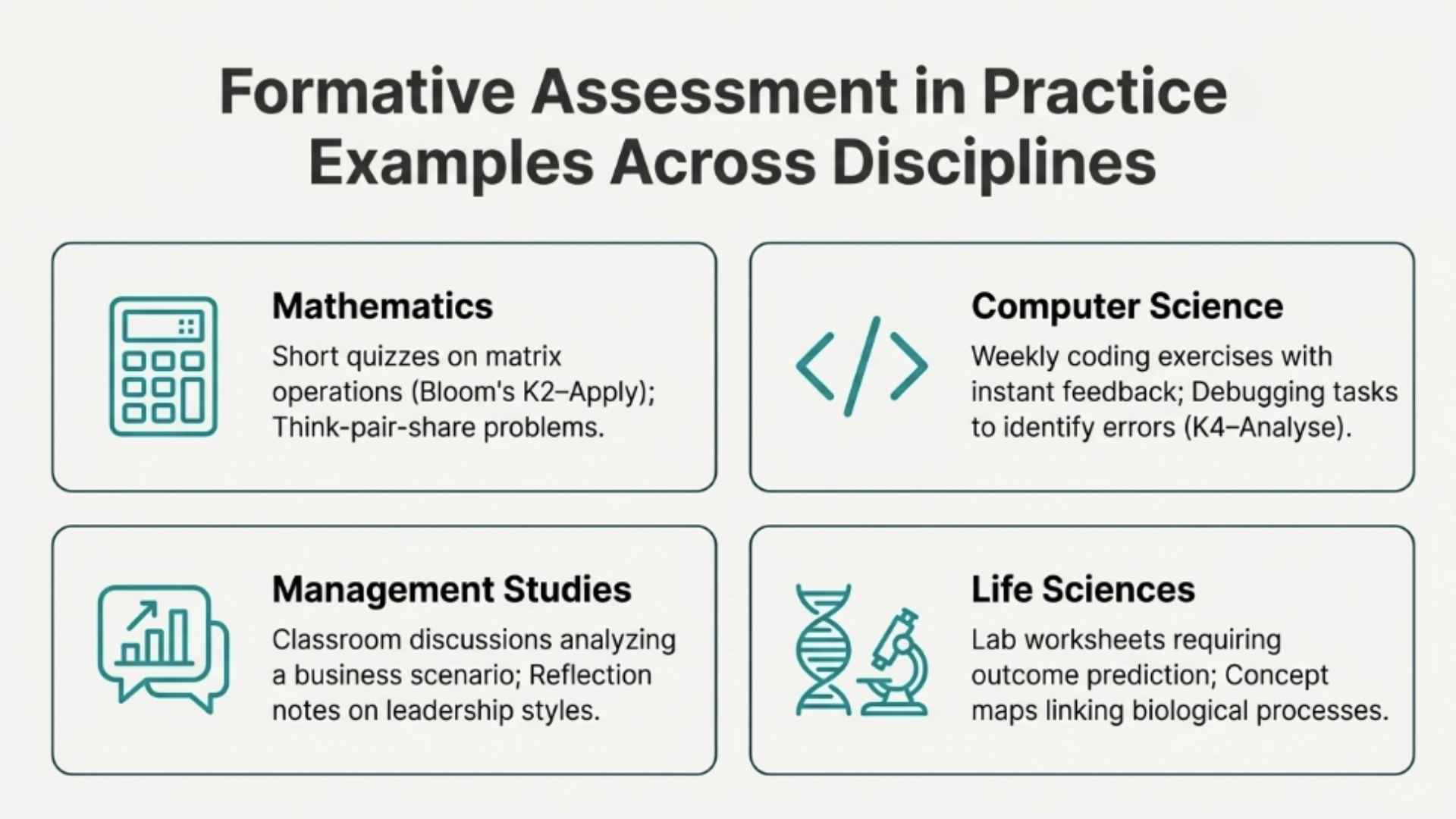 Mathematics
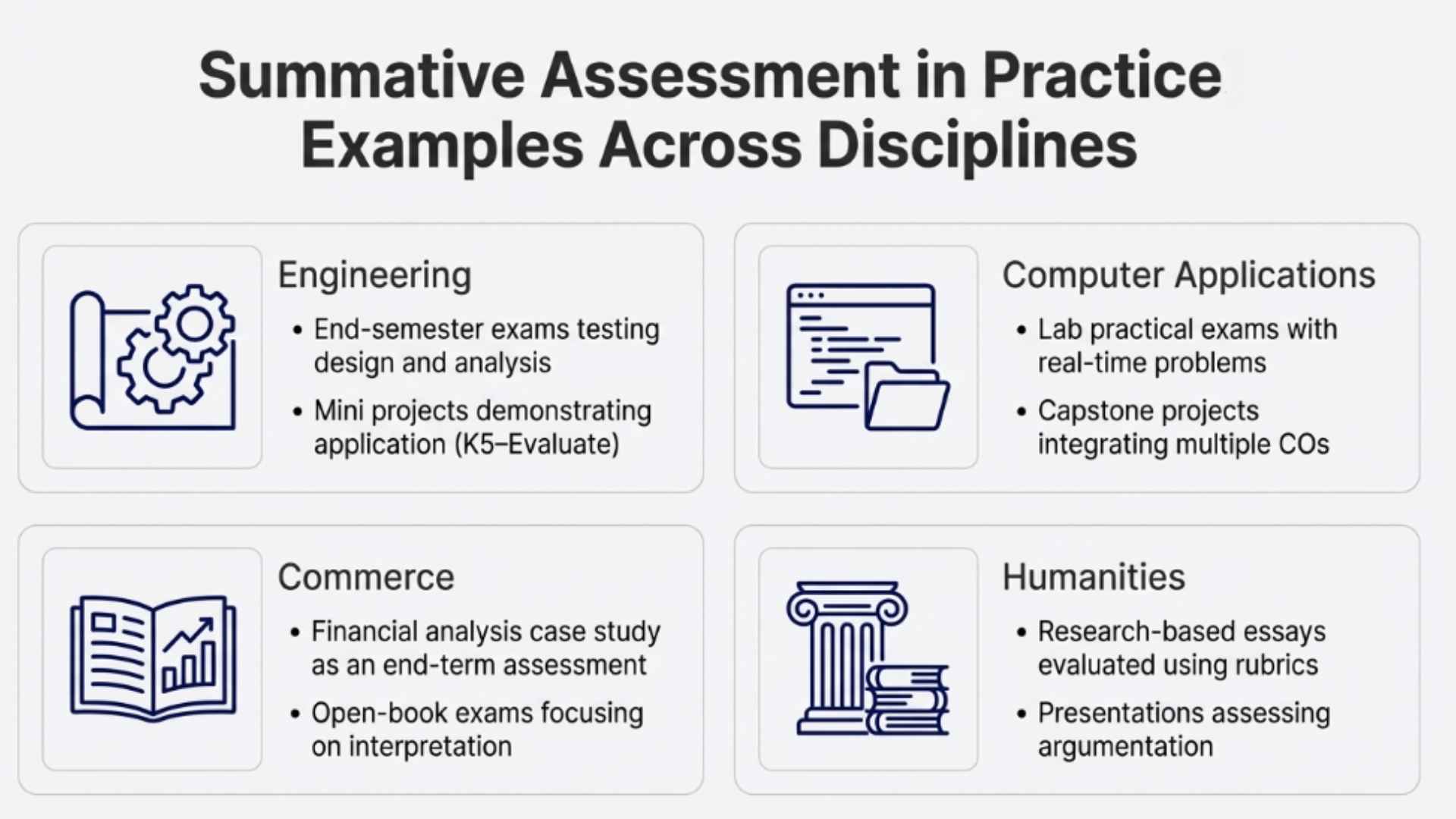 Engineering
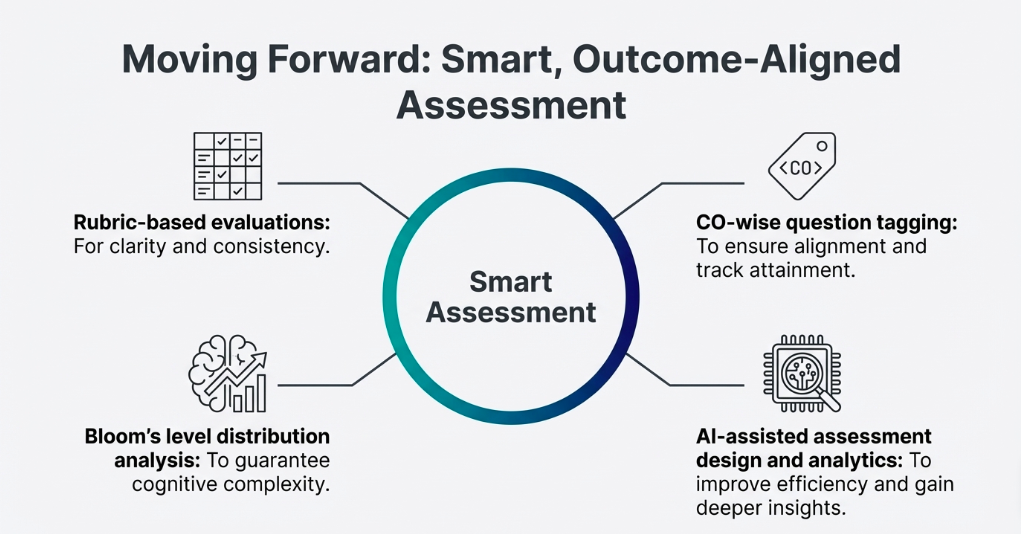 Yet, the philosophy remains traditional and timeless: Teach with care. Assess with clarity. Improve with evidence. When formative and summative assessments work together, education shifts from marks-driven to meaning-driven. And that’s where real outcomes happen. Author’s Note This article is grounded in practical OBE implementation experience across higher education institutions, aligned with accreditation frameworks and contemporary assessment research, while respecting long-standing pedagogical principles. [/fusion_text][/fusion_builder_column][/fusion_builder_row][/fusion_builder_container]