
Perception: An Accreditation Parameter That Begins With Design
Perception is no longer a soft metric. It's a strategic input into your NAAC accreditation score. NAAC’s Institutional Assessment and Accreditation (IAA) framework considers Institutional Distinctiveness, Stakeholder Feedback, and Visibility—all of which are directly influenced by your web presence.Here's how:
- Presentation of Institutional Identity: Your website must clearly reflect your vision, mission, core values, and institutional uniqueness—a criterion under NAAC Key Indicator 7.3.1.
- Stakeholder Experience: Navigation, accessibility, and responsiveness all impact how students, faculty, parents, and regulatory bodies perceive your institution.
- Transparency & Trustworthiness: Accurate display of affiliations, recognitions, and statutory disclosures on your website reflects your integrity—a vital component of NAAC's qualitative evaluation.
Showcasing NAAC Accreditation & Other Recognitions
Why It Matters:
Over 800 universities and 15,000+ colleges in India are NAAC accredited as of 2023. With increased emphasis on digital evidence and public transparency, your website is where your credibility lives.What to Include:
- Accreditation certificates (NAAC, NBA, NIRF, ISO, etc.)
- SSR (Self-Study Reports), AQARs, and DVV Clarifications
- Institutional Best Practices
- Links to the AISHE and NIRF dashboards
Content Strategy & SEO That Works
Keywords That Convert
Use search terms that reflect user behavior—“NAAC A++ college in Kerala,” “Best MBA Colleges with AICTE Approval,” “Engineering colleges with top placements,” etc.Content Architecture
Segmented hubs—Admissions, Courses, Research, Placements, Life @ Campus—each with curated content, optimized for search and conversions.Use Blogs & Case Studies
Institutions that blog regularly generate 67% more leads per month than those that don’t. Faculty thought-leadership and student stories help build authority.Multimedia & Immersive Features
Original images, video walkthroughs, alumni testimonials, and 360° virtual tours aren’t just “nice to have”—they reduce bounce rate and increase dwell time by up to 47%. You can also build standout web experiences through narrative storytelling and multimedia.Accessibility & Compliance
A Missed Opportunity for Many HEIs:
An audit of Indian university websites revealed that over 30% failed basic WCAG 2.1 accessibility checks.What You Need:
- Alt text for images
- High-contrast colour schemes
- Keyboard navigability
- Language toggles (especially for regional-language institutions)
- Clear privacy and data usage policies, in line with India’s Digital Personal Data Protection Act (DPDPA)
Personalisation & Smart Engagement
AI-powered chatbots, personalized course recommendation engines, and predictive lead generation tools create a seamless user journey—particularly valuable for Gen Z students who expect intuitive digital experiences. Institutions adopting AI tools for interaction have seen up to 35% higher conversion in inquiries to admissions.Speed, Performance & Infrastructure
- A 1-second delay in load time can reduce conversions by 7%
- Compress images and videos
- Implement Content Delivery Networks (CDNs)
- Migrate to scalable, cloud-based hosting for peak traffic seasons
Analytics & ROI Measurement
Use Tools Like:
- Google Analytics 4 (GA4)
- Hotjar or Clarity for user behavior
- UTM tags and form tracking for campaign attribution
Track:
- Time on page
- Bounce rates
- Click-through on calls-to-action (CTAs)
- Number of enquiries and completed forms
Alumni, Community & Social Integration
An engaged alumni base can drive mentorship, funding, and student inspiration. Portals for alumni registration, networking, and success stories are essential. Social media integration (e.g., Instagram galleries, Twitter feeds, YouTube embeds) adds real-time relevance.Future-Ready Features: Where Higher Ed Is Headed
- Progressive Web Apps (PWAs) for offline access
- Blockchain-verified Certificates to ensure tamper-proof documentation
- VR-powered Open Houses for global student outreach
- Voice-enabled Navigation for inclusive access


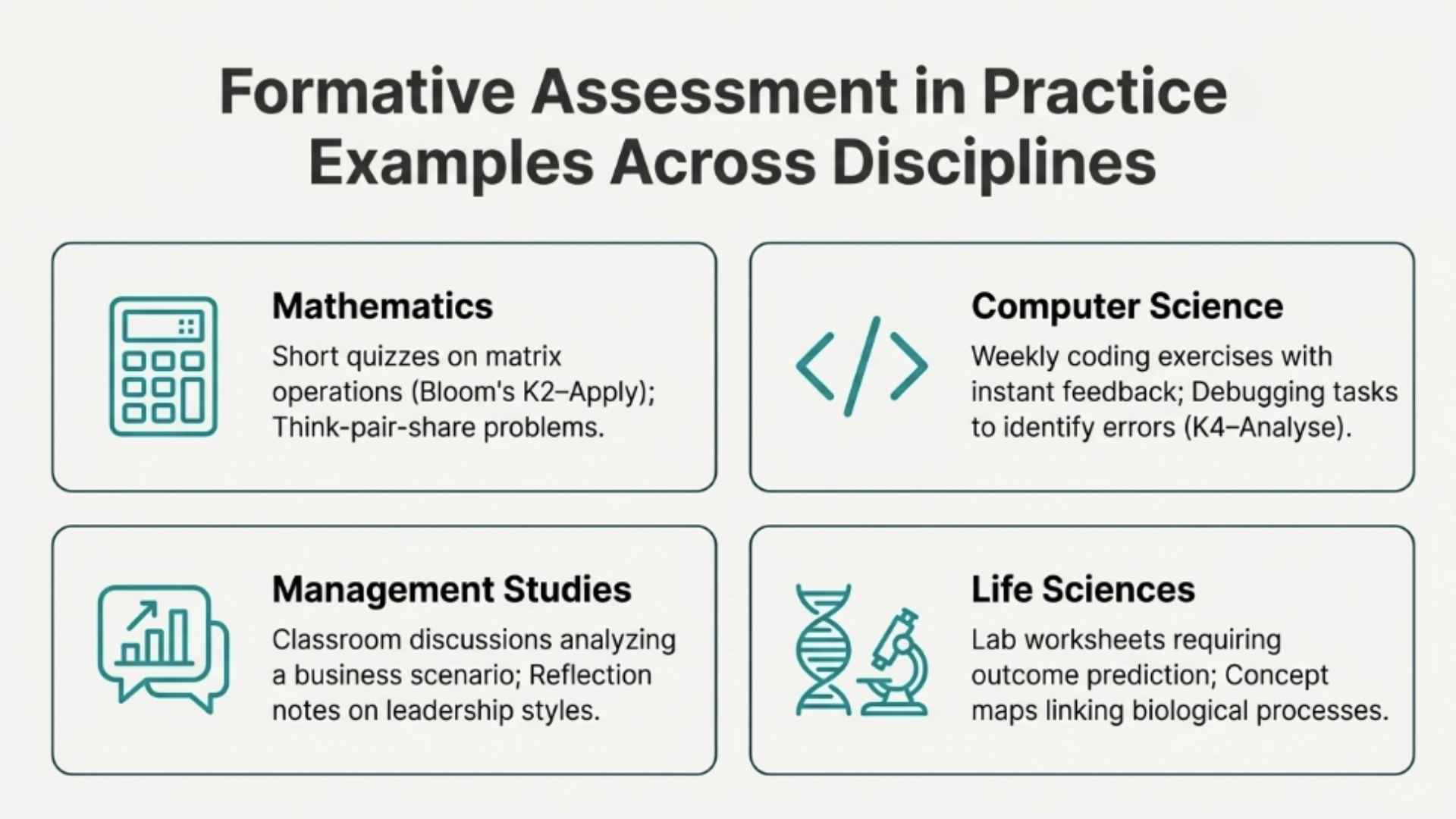 Mathematics
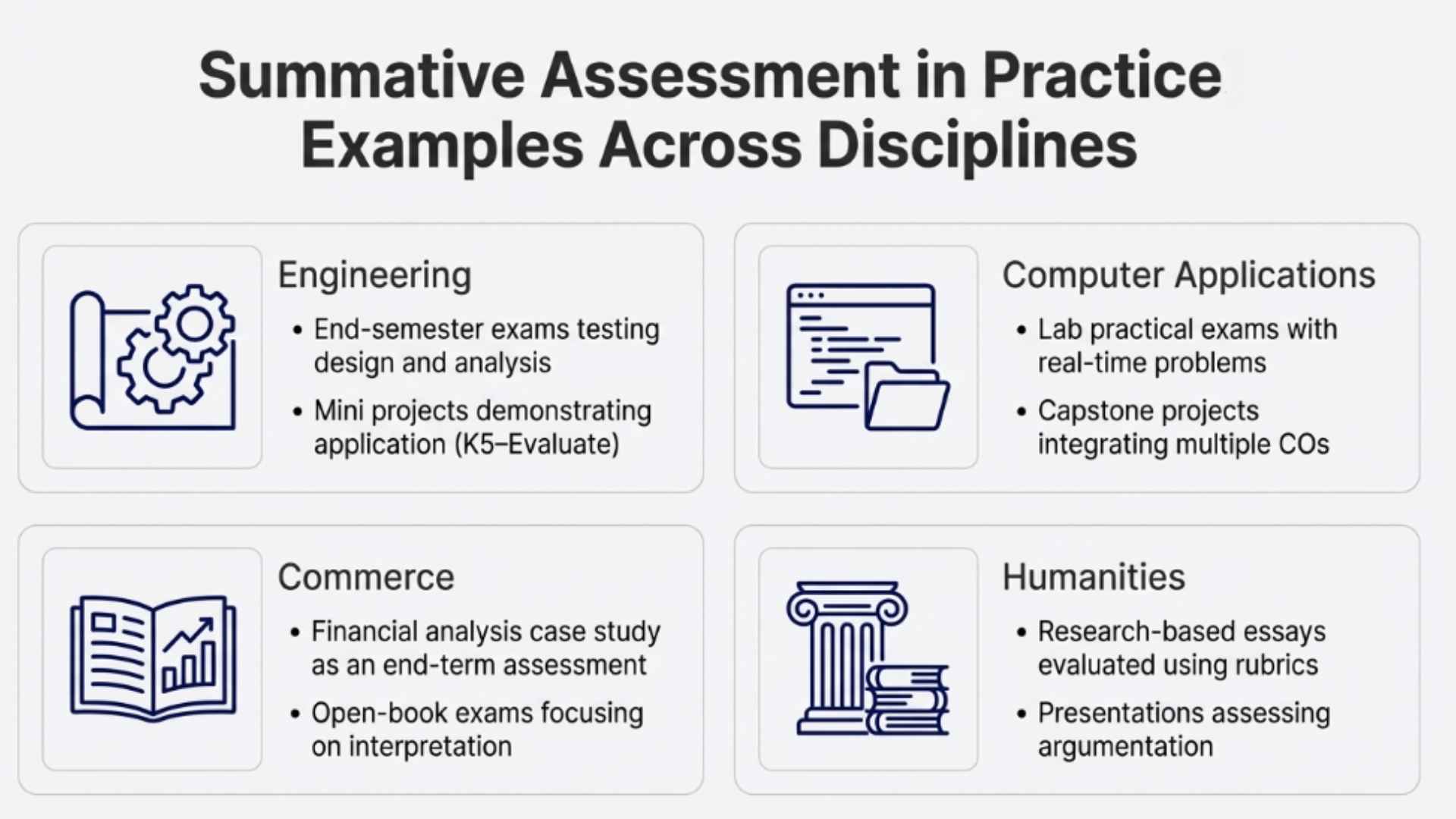 Engineering
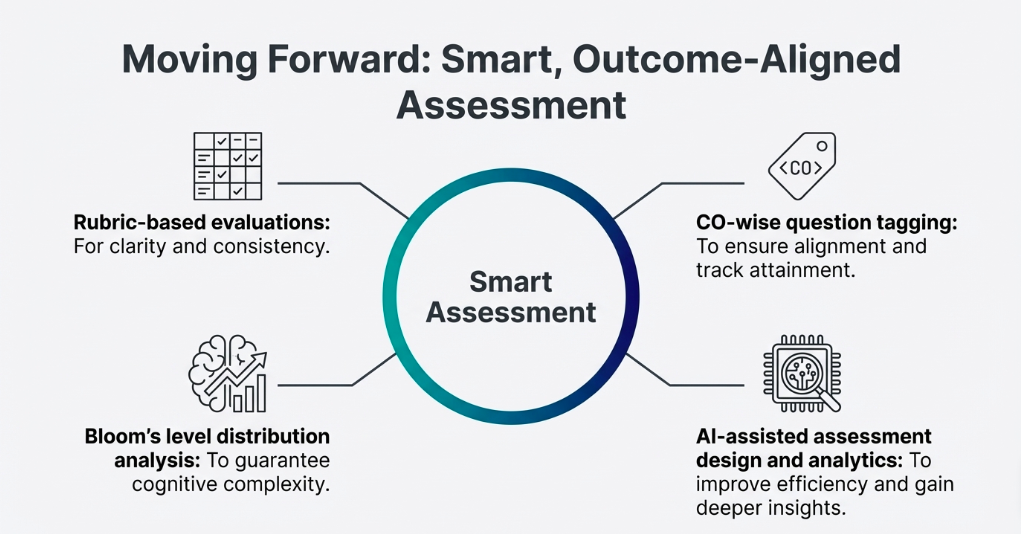 Yet, the philosophy remains traditional and timeless: Teach with care. Assess with clarity. Improve with evidence. When formative and summative assessments work together, education shifts from marks-driven to meaning-driven. And that’s where real outcomes happen. Author’s Note This article is grounded in practical OBE implementation experience across higher education institutions, aligned with accreditation frameworks and contemporary assessment research, while respecting long-standing pedagogical principles. [/fusion_text][/fusion_builder_column][/fusion_builder_row][/fusion_builder_container]