
Understanding India: NEP-aligned Short Term courses on Indian Heritage and Culture
India is a land of rich heritage and culture, and the University Grants Commission (UGC) has proposed introducing courses that showcase this diversity to attract international students. The UGC has issued draft guidelines for higher educational institutions to offer short-term modular programs on various aspects of Indian culture, including Vedic mathematics, yoga, ayurveda, Sanskrit, Indian literature, sculpture, music, dance forms, and more.
The Indian Heritage and Culture courses
These programs will be credit-based and multi-tiered, allowing participants to enter and exit at various stages. The course offerings will encompass a wide range of topics, such as Universal Human Values, Vedic Maths, Yoga, Ayurveda, Sanskrit, Indian Languages, various religious sites and monuments located in the Indian subcontinent, Indian Literature, Indian Sculpture, Indian Music and Dance Forms, Drama, Visual Arts, Performing Arts, Crafts and Craftsmanship, Inscriptions, Rituals, Cultural Heritage, and the Indian Knowledge System, among others.
Teaching-Learning Medium and Techniques
Different teaching-learning mediums and techniques will be used to maximise student engagement and enhance the learning experience. They are:
- Lecture (online/ offline mode)
- Audio Video
- Special Lecture
- Focused group discussion
- Practical session
- Excursion
- Stage performance
- Counselling and guidance
The course can be completely designed by the HEI as per UGC guidelines. For example, under Indian Music and Dance Forms, a course on Sopana Sangeetham, a music form unique to Kerala, can be offered by a college in Kerala, as it would be giving this music its due recognition.Course curricula can include its origins, history, artists, instruments, traditions, and rules, including all these teaching-learning methods.
Faculty members of various Departments will be roped in to teach this kind of multi and transdisciplinary programmes. The libraries, institutions and experts of the relevant disciplines are to be included in the excursion.
The guidelines also state that these courses will be taught by faculty members from various departments and that the excursion will include libraries, institutions, and experts from relevant disciplines.
Suggested Courses
- Indian culture
- Indian Ethics (values)
- Ayurveda
- Yoga
- Indian philosophy
- Indian Music
- Indian dance
- Indian percussion and Vocal music
- Holy geographical regions of India
- Archaeological sites of India
- Indian Arts and Architecture
- Cultural heritage of India
- Indian folklore- Narrative convention
- Indian stage
- Indian drama (Natyakala) / Sanskrit drama
- Indian inscription
- Indian manuscript system
- Indian script
- Indian rituals
- Indian food and fashion
- Sanskrit Language and Literature
- Prakrit Language and Literature
- Pali Language and Literature
- Hindi Language and Literature
- Tamil Language and Literature
- Telugu Language and Literature
- Kannada Language and Literature
- Malayalam Language and Literature
- Bengali language and Literature
- Marathi Language and Literature
- Gujarati Language and Literature
- Odia Language and Literature
- Assamese Language and Literature
- Punjabi Language and Literature
- Kashmiri (Kashmir Shaivism) Language and Literature
- Nepali Language and Literature
- Urdu Language and Literature
- Vedic mathematics
- Astrology
- Indian Craft System
- Indian Literature
- Indian Mythology
- Indian Law
- Indian ethics
- Indian Logic
- Indian rivers: History and culture
Eligibility and Target Group
Individuals with an interest in Indian heritage and knowledge systems from different countries are eligible to enrol in courses aimed at acquiring such knowledge. The concerned University/Institution offering these courses may specify particular eligibility criteria.
Programme Levels
The courses will be offered at three levels: introductory, intermediate, and advanced, and eligibility criteria will be established by the university or institution offering the courses. With a hybrid mode of learning, each program is set to have 60 hours, and the respective institutions will have to create the curriculum.
Credit System and Credit Transfer
Credits obtained through these programs will be acknowledged through the credit transfer system by any Higher Educational Institution (HEI) with relevant modifications via the Academic Bank of Credit (ABC). The credits can be accumulated or redeemed towards academic certification as per the UGC guidelines. However, the HEIs will decide the required credits, educational components, and learning outcomes at the necessary level.
Certification
Upon completing each level of the course successfully, learners will receive certificates specified by the Higher Educational Institutions. These certificates will be provided in digital format through the National Academic Depository (NAD) of the Government of India.
The UGC's move to introduce courses on Indian heritage and culture is in line with the National Education Policy 2020, which emphasises the importance of Indian knowledge systems and culture. Institutions like Delhi University have already started offering courses on Vedic mathematics, ethics, and values in ancient Indian traditions, yoga, ayurveda, and nutrition, among others.
By offering such programs, India hopes to showcase its rich cultural heritage to the world and attract international students who are interested in learning about it. This initiative is also expected to help bridge the gap between the Indian education system and the rest of the world.
[/fusion_text][/fusion_builder_column][/fusion_builder_row][/fusion_builder_container]


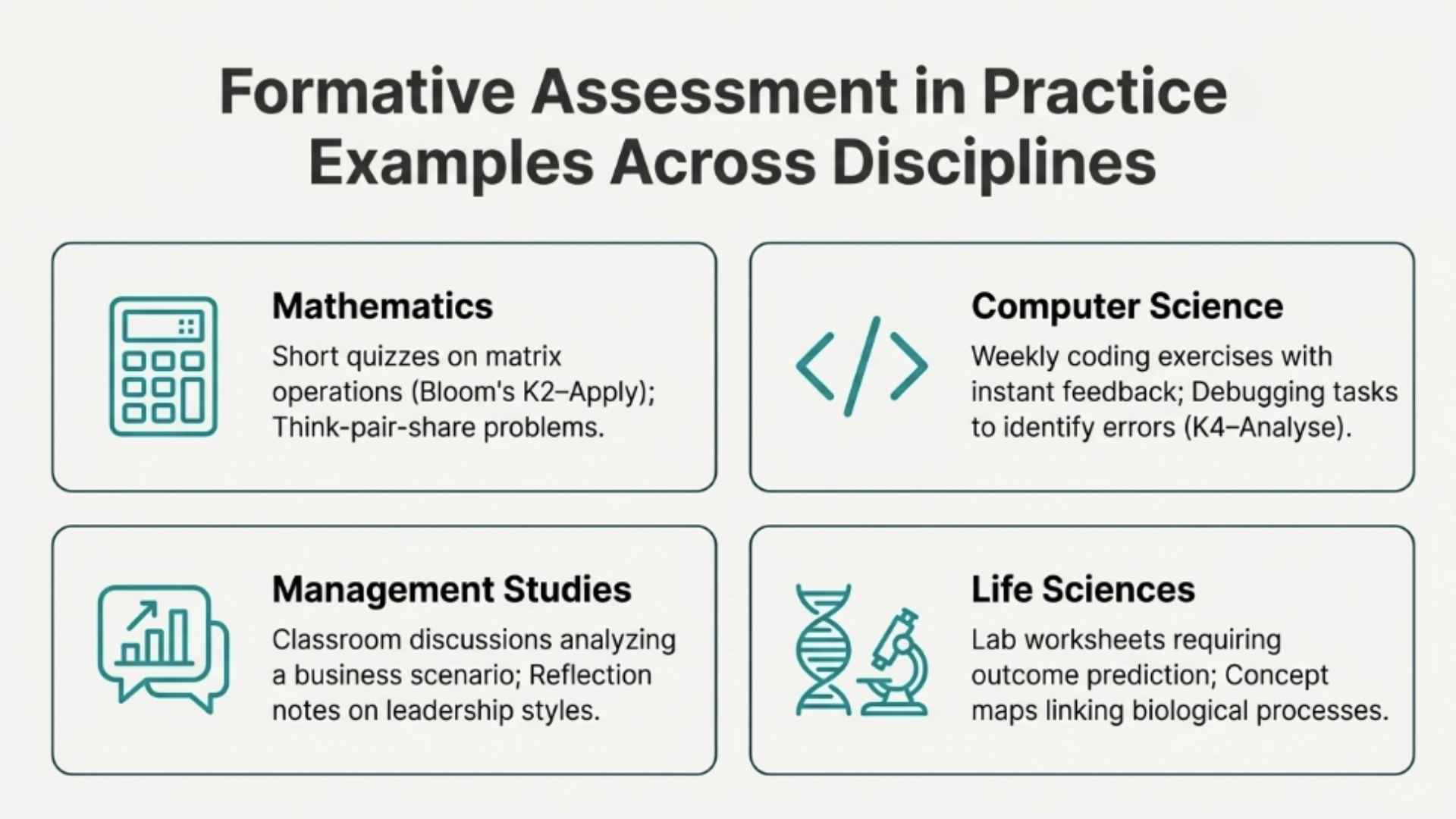 Mathematics
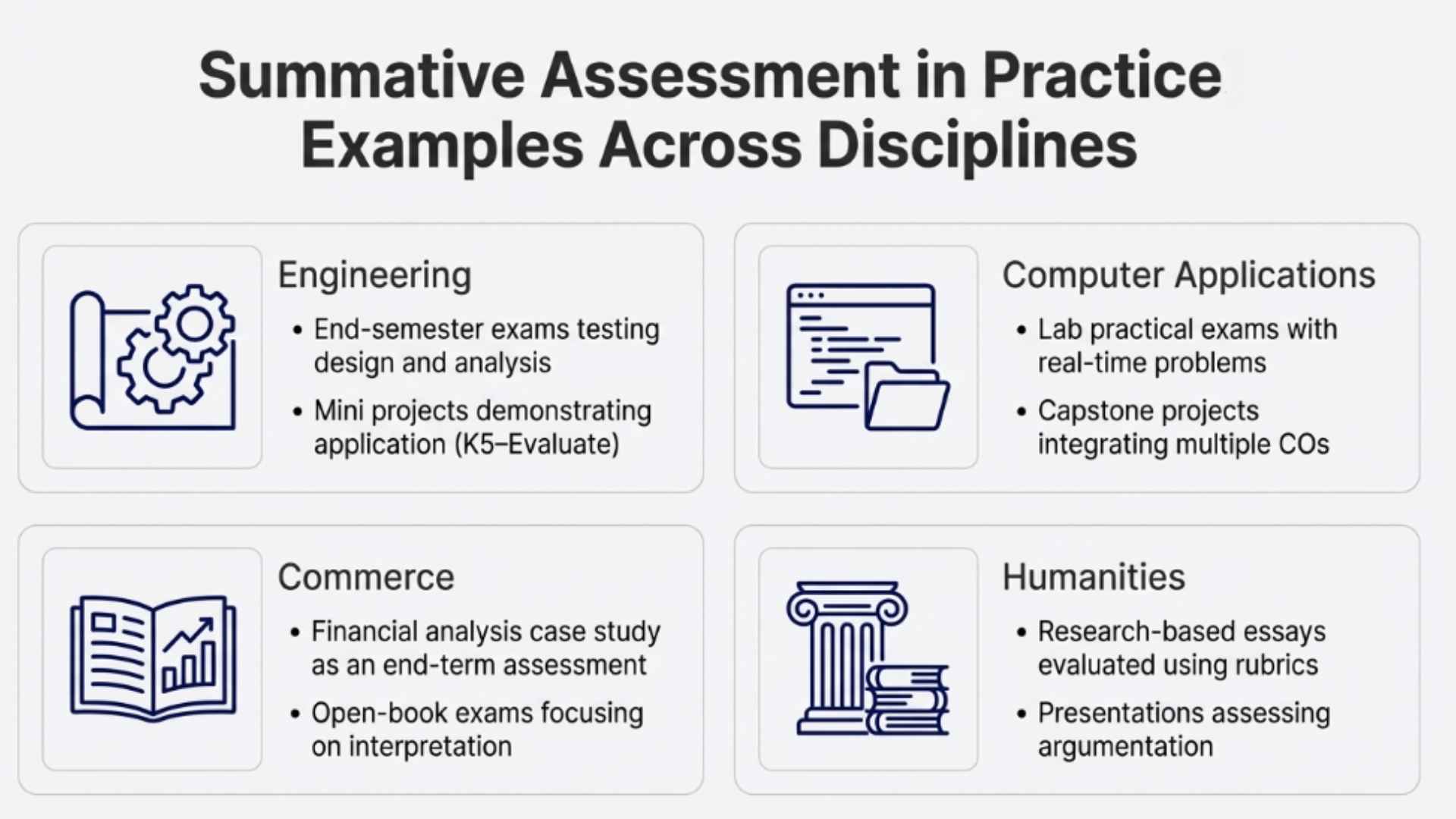 Engineering
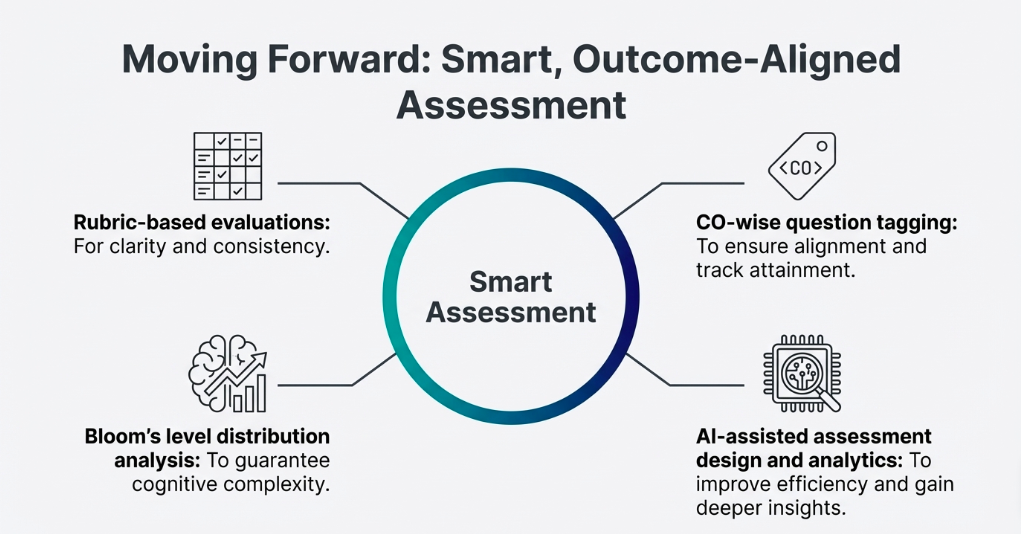 Yet, the philosophy remains traditional and timeless: Teach with care. Assess with clarity. Improve with evidence. When formative and summative assessments work together, education shifts from marks-driven to meaning-driven. And that’s where real outcomes happen. Author’s Note This article is grounded in practical OBE implementation experience across higher education institutions, aligned with accreditation frameworks and contemporary assessment research, while respecting long-standing pedagogical principles. [/fusion_text][/fusion_builder_column][/fusion_builder_row][/fusion_builder_container]